
AWS Jam adds three hands-on agent challenges, from specs to production governance
The new team challenges cover agentic coding, AgentCore deployment, and multi-agent governance in a live cloud sandbox.

Key takeaways
AWS announced three new AWS Jam experiences on September 30 for agentic AI development: spec-driven development with Kiro, building agents with Bedrock AgentCore, and advanced agentic systems. The company lists eight to twelve hands-on challenges covering MCP servers, subagents, content safety, IAM isolation, monitoring, and policy controls. Each is a one-day, team-based exercise in a live AWS console sandbox and can be offered alone or alongside instructor-led training. Participants solve operational tasks with AWS services rather than answer multiple-choice questions. The exercises can reveal gaps in deployment, permissions, and troubleshooting, but completion is not proof that a team is production-ready. Confirm access requirements, delivery format, and possible sandbox resource charges before scheduling a session.
Direct answer
AWS announced three new AWS Jam experiences on September 30 for agentic AI development: spec-driven development with Kiro, building agents with Bedrock AgentCore, and advanced agentic systems. The company lists eight to twelve hands-on challenges covering MCP servers, subagents, content safety, IAM isolation, monitoring, and policy controls. Each is a one-day, team-based exercise in a live AWS console sandbox and can be offered alone or alongside instructor-led training. Participants solve operational tasks with AWS services rather than answer multiple-choice questions. The exercises can reveal gaps in deployment, permissions, and troubleshooting, but completion is not proof that a team is production-ready. Confirm access requirements, delivery format, and possible sandbox resource charges before scheduling a session.
Verified facts
AWS announced three agentic-AI Jam experiences on September 30, 2026.
The Kiro experience lists eight challenges; the AgentCore and advanced-systems experiences list twelve each.
Each is a one-day team exercise in a live AWS console sandbox and can run standalone or with instructor-led training.
What changed
- Kiro challenges cover specs and coding-agent workflows.
- AgentCore challenges cover runtimes, memory, and safety.
- Advanced tasks include multi-agent communication and governance.
- Teams work in a live service sandbox.
Impact for AI users
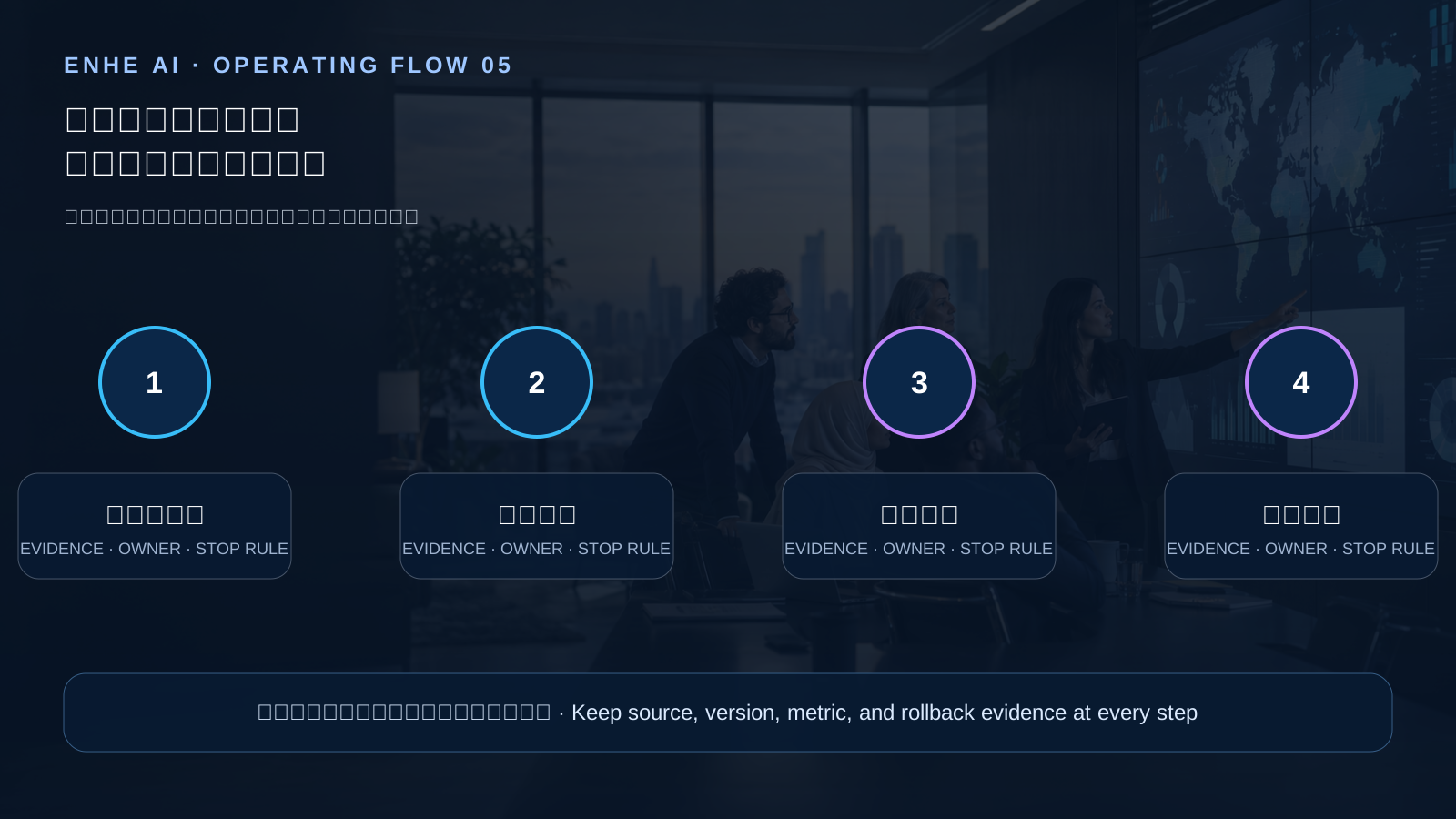
A live challenge turns abstract training into a team exercise, especially for permissions, tool access, monitoring, and troubleshooting. The sandbox has account and resource prerequisites, and a score does not replace a production-readiness review. After training, convert discovered gaps into the team’s own change list and replay one realistic, sanitized workflow in a non-production environment.
Operating checklist
- Confirm participant accounts and sandbox permissions.
- Choose the experience that matches the team’s gaps.
- Record issues in permissions, monitoring, and rollback.
- Use a separate readiness review before production deployment.
AI frontier news and analysis, AI software and model tools, AI skill tutorials and validation methods, and AI account and permission guidance
FAQ
Does completing a Jam mean an agent is production-ready?
No. It is a skills exercise, not a system-specific security or reliability sign-off.
Is an instructor required?
AWS says the experience can be standalone or paired with instructor-led training; confirm the chosen delivery format.
Summary
AWS Jam turns agent engineering into team exercises that reveal skill gaps; production use still needs separate validation.
This is an AI-assisted draft and requires ENHE human review before public release.
What this means for everyday users
A live challenge turns abstract training into a team exercise, especially for permissions, tool access, monitoring, and troubleshooting. The sandbox has account and resource prerequisites, and a score does not replace a production-readiness review. After training, convert discovered gaps into the team’s own change list and replay one realistic, sanitized workflow in a non-production environment.
Tools you may use

Related tutorials
Related Tools And Tutorials
Use the following ENHE AI sections to continue from the news signal into tool selection, account-service guidance, or practical learning.
Related reading
From Chat Boxes to Personal AI Companions: AI Assistants Are Entering the Desktop Execution Era
AI assistants are moving from answering questions toward continuing real tasks. AI agents, MCP tool ecosystems, personal memory, and local workbenches are pushing this shift together. For users, the real value is not another chat box, but less repeated context setup and more continuity from thinking to doing.
Smartsheet MCP Is Generally Available for Amazon Quick and Kiro Workflows
AWS has published a guide to the generally available Smartsheet MCP Server, which exposes more than forty tools for reading, writing, and managing sheets, rows, columns, and automations. Business users can connect through Amazon Quick, while developers can configure the server in Kiro. This article compares the two paths, lists the documented account, authentication, and regional requirements, and proposes a safe first task: identify blocked work and produce a review checklist without writing changes. Only after results, user permissions, and organization controls are verified should a team enable a narrowly scoped write action. Natural-language requests do not grant extra access, and a connected agent should not be treated as an unrestricted project administrator.
Nine-Stage AI Agent Evaluation Checklist: From First Commit to Production Drift
AWS published a nine-stage production AI-agent evaluation framework built around Amazon Bedrock AgentCore on October 16, 2026. It follows an agent from defining quality and comparing experiments through merge checks, deployment gates, canary scoring, adversarial testing, drift detection, live pulse monitoring, and feedback-driven improvement. The framework evaluates five dimensions—safety, quality, performance, cost, and operational control—at tool, individual-agent, and multi-agent levels. This durable guide converts the public framework into a vendor-neutral checklist for ordinary teams, with minimum evidence, ownership, and stop conditions designed to catch soft failures where latency and uptime remain normal while answer quality quietly declines over time.
ElevenLabs Expands Its MCP Connector to Voice, Music, Images, and Video
ElevenLabs updated its MCP connector announcement on October 12, 2026. Through an OAuth sign-in, users can access speech generation, transcription, dubbing, music, sound effects, images, and video from compatible assistants such as Claude, ChatGPT, and Cursor, with outputs stored in an ElevenCreative workspace. The connector removes manual API-key handling and can expose more than 50 models, but that does not remove billing, permission, privacy, or rights obligations. This article gives a minimum workflow from connection to publication: choose the correct workspace, review requested scopes, restrict available tools, test with non-sensitive material, inspect model and cost records, verify consent and asset rights, edit the result, and require a human approval before anything is published externally.
GitHub Copilot Local Sandboxing Is Generally Available
GitHub made local sandboxing generally available on October 7, 2026 for GitHub Copilot CLI, the GitHub Copilot app, and VS Code sessions that use Agent Host. The feature applies operating-system controls to agent-run commands so users can restrict filesystem paths, network access, Git credentials, and supported local tools. GitHub's documentation also sets important boundaries: local sandboxing is off by default, CLI and app settings are separate, remote MCP servers are not sandboxed, and some in-process file tools enforce policy on a best-effort basis rather than through the operating-system sandbox. This guide focuses on verification rather than the toggle itself: enable the feature, test denied reads and writes, test blocked network access, confirm credential masking, inspect MCP placement, and configure fail-closed behavior where the organization requires enforcement.
AI Agent Identity and Authorization: A Least-Privilege Checklist
Once an AI agent can reach email, files, repositories, and business tools, knowing which human signed in is no longer enough. A safe workflow must identify the agent, the person or organization it represents, the task-specific authority it received, the resources and actions allowed, and the evidence that links each consequential action back to approval. NIST's February 2026 concept paper on software and AI agent identity and authorization frames these questions around identification, authentication, least privilege, delegated authority, tamper-resistant audit records, non-repudiation, and prompt-injection mitigation. This durable checklist translates that enterprise-oriented draft into practical steps for individuals and small teams: use a distinct agent identity, short and narrow authorization, separate read and write tools, explicit approvals, revocation, provenance, and periodic access review.