
Amazon Bedrock and OpenCode make multi-model coding agents auditable
AWS shows OpenCode calling Kimi K3, GPT-OSS, and Nemotron while keeping account-level controls.

Key takeaways
AWS described on September 23 how to use open-weight models in OpenCode through Amazon Bedrock. OpenCode is a terminal-native Go agent that supports more than 75 model providers; the example uses Kimi K3, GPT-OSS 120B, and NVIDIA Nemotron 3 Super 120B while keeping inference in the customer’s AWS account. IAM, CloudTrail, PrivateLink, encryption, and model routing provide controls that fit existing delivery practices. As a durable task, teams should pin model and permission versions, isolate the workspace, log tool calls and cost, and place real-service verification after local tests before allowing an agent patch into release. Teams should verify the vendor claims against their own workloads, controls, and operating context before making a production decision.
Direct answer
AWS described on September 23 how to use open-weight models in OpenCode through Amazon Bedrock. OpenCode is a terminal-native Go agent that supports more than 75 model providers; the example uses Kimi K3, GPT-OSS 120B, and NVIDIA Nemotron 3 Super 120B while keeping inference in the customer’s AWS account. IAM, CloudTrail, PrivateLink, encryption, and model routing provide controls that fit existing delivery practices. As a durable task, teams should pin model and permission versions, isolate the workspace, log tool calls and cost, and place real-service verification after local tests before allowing an agent patch into release. Teams should verify the vendor claims against their own workloads, controls, and operating context before making a production decision.
Verified facts
AWS demonstrated OpenCode with open-weight models through Amazon Bedrock on September 23, 2026.
OpenCode is a terminal-native Go agent supporting more than 75 providers; the example includes Kimi K3, GPT-OSS 120B, and Nemotron 3 Super 120B.
AWS says inference stays in the customer account and can use IAM, CloudTrail, PrivateLink, and encryption controls.
What changed
- A terminal-native agent connects to many model providers
- The example covers three open-weight models
- Inference, logs, and permissions remain in the cloud account control plane
- Live-service checks become a standing release gate
Impact for AI users
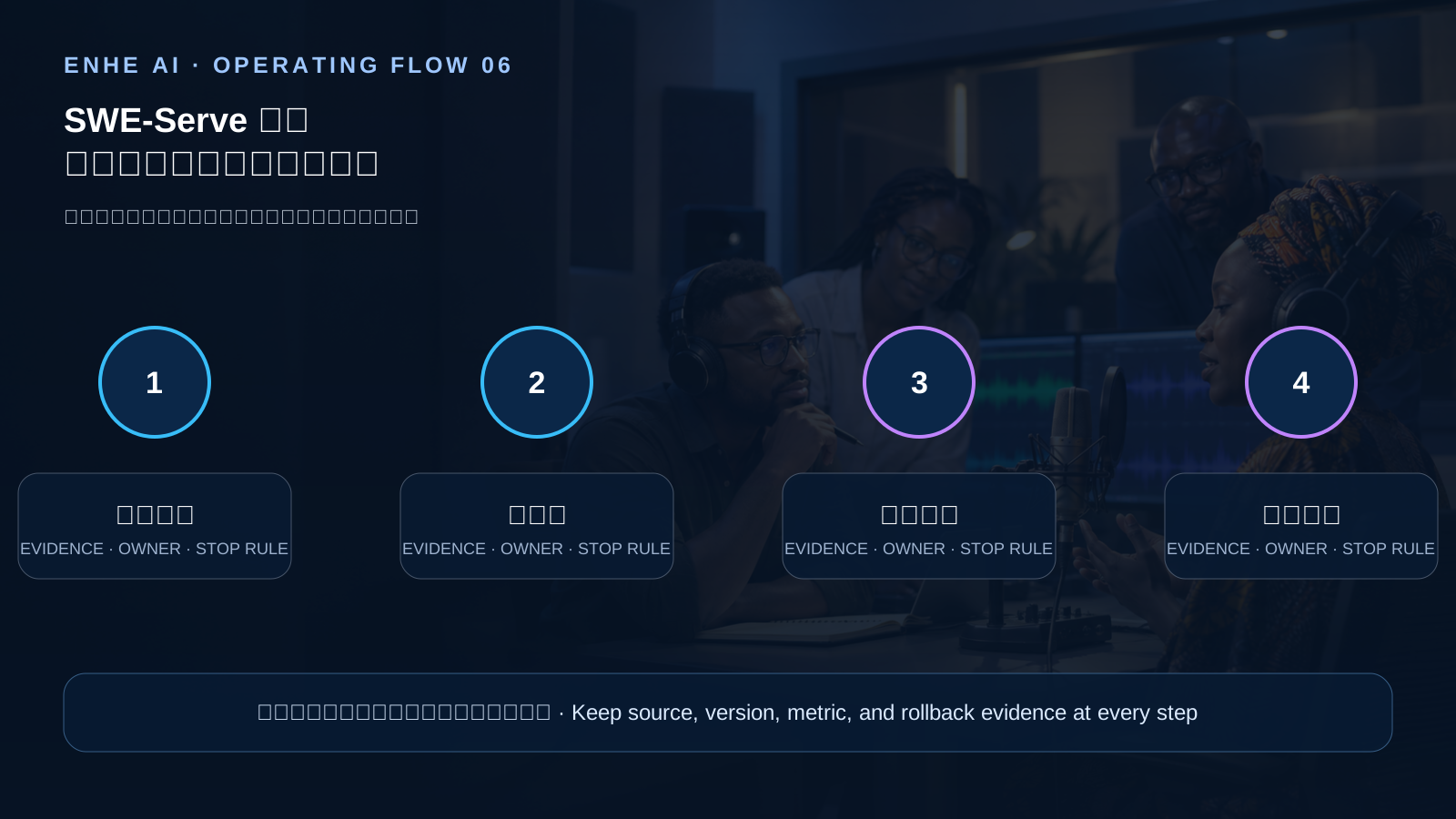
This is a repeatable release task for coding agents: whenever models, prompts, tools, or permissions change, pin versions in an isolated branch, inspect tool calls and data boundaries, run local tests and a real-service check, and preserve cost and rollback evidence. Multi-model routing may reduce lock-in but expands the evaluation matrix beyond one generated patch.
Operating checklist
- Pin model, prompt, and tool versions
- Use IAM to limit agent read and write resources
- Record CloudTrail, cost, and failed requests
- Start a real service check after local tests pass
AI frontier news and analysis, AI software and model tools, AI skill tutorials and validation methods, and AI account and permission guidance
FAQ
Does OpenCode send code to any model automatically?
It depends on configured providers and routing; teams must review data boundaries and permissions first.
Why add a live-service check?
Model loading, tool calls, request paths, and permissions may fail only when the service runs.
Summary
OpenCode with Bedrock fits coding agents into cloud governance, while durable value depends on pinned versions, tool audits, and live-service gates.
This AI-assisted article is checked by ENHE AI automation for official sources, bilingual fields, media rights, page safety, and historical duplication before publication.
What this means for everyday users
This is a repeatable release task for coding agents: whenever models, prompts, tools, or permissions change, pin versions in an isolated branch, inspect tool calls and data boundaries, run local tests and a real-service check, and preserve cost and rollback evidence. Multi-model routing may reduce lock-in but expands the evaluation matrix beyond one generated patch.
Tools you may use

Related tutorials
Related Tools And Tutorials
Use the following ENHE AI sections to continue from the news signal into tool selection, account-service guidance, or practical learning.
Related reading
How to Use GitHub Package Firewall: An npm Safety Checklist for Coding Agents
GitHub introduced Package Firewall in public preview on October 20, 2026 for GitHub Enterprise Cloud customers, including data-resident environments. The firewall sits between coding agents, CI runners, or internal registries and upstream package repositories. It evaluates package metadata and downloads against enterprise policies such as cooldown periods, GitHub Advisory Database checks, and supply-chain signals including attestation downgrades. The preview is free, but general availability is expected to use metered pricing similar to Actions, and npm is the only supported ecosystem today. This durable guide provides a rollout checklist for endpoint routing, a read-only build, blocked-package exceptions, audit evidence, false-positive review, and future budget preparation.
Nine-Stage AI Agent Evaluation Checklist: From First Commit to Production Drift
AWS published a nine-stage production AI-agent evaluation framework built around Amazon Bedrock AgentCore on October 16, 2026. It follows an agent from defining quality and comparing experiments through merge checks, deployment gates, canary scoring, adversarial testing, drift detection, live pulse monitoring, and feedback-driven improvement. The framework evaluates five dimensions—safety, quality, performance, cost, and operational control—at tool, individual-agent, and multi-agent levels. This durable guide converts the public framework into a vendor-neutral checklist for ordinary teams, with minimum evidence, ownership, and stop conditions designed to catch soft failures where latency and uptime remain normal while answer quality quietly declines over time.
Adobe and NVIDIA Expand Agentic Creation With RTX Spark Optimization
Adobe and NVIDIA announced an expanded collaboration on October 15, 2026. Adobe is optimizing Photoshop, Premiere, and Substance 3D for the NVIDIA RTX Spark superchip and says selected AI processing, editing, color, and effects workflows can run up to twice as fast. The companies are also continuing cloud acceleration work for Frame.io, while Adobe Brand Concierge is being optimized with NVIDIA Nemotron open models for enterprise conversational experiences. The announcement describes partnership direction and vendor performance claims; it does not establish that every project, device, application version, or region receives the same result. This article gives creators a purchase and rollout checklist covering supported versions, representative project benchmarks, quality parity, local versus cloud data paths, power and storage, licensing, total cost, collaboration compatibility, and a fallback to existing hardware before any upgrade decision.
MHK puts healthcare workflows behind one orchestrator and workflow-level controls
On September 30, AWS published a customer story about MHK’s SmartProminence AI Orchestrator, built with Amazon Bedrock, ECS, and event-driven components for health-plan workflows. MHK reports that new AI features now ship in two weeks instead of more than three months and that manual medical-review effort fell by 90 percent. These are customer-reported outcomes in an AWS case study, not independent clinical validation and not evidence that review can be removed. The architecture separates workflow control from model-processing agents, pins workflow versions, routes database access through a central orchestration core, and applies encryption and audit controls. Healthcare and claims decisions still require qualified human review appropriate to the task.
Three agents produce a track together on persistent AgentCore runtimes
On September 30, AWS published a hands-on example in which three specialized agents collaborate to render, generate, and clear a music track on Amazon Bedrock AgentCore Runtime Instances. The sample colocates agents on one GPU-backed instance, gives them persistent shared storage, and uses a shared session ID for handoffs and resumable work. AWS says Runtime Instances can host agents built with different frameworks; the walkthrough uses Strands and a file-backed session manager. It is an implementation example, not evidence of unattended production readiness. Deploying it provisions cloud resources such as runtimes, storage, and container repositories, so teams should estimate ongoing charges, narrow IAM permissions, and test cleanup and failure isolation before adapting the pattern.
Bedrock’s claims example pairs natural-language retrieval with citations and access filters
On September 30, AWS published a walkthrough for querying synthetic insurance claims with Amazon Bedrock Knowledge Bases. It indexes PDF, Word, and text records and returns answers with citations. AgenticRetrieveStream can break down multi-part questions, repeat retrieval, and expose trace events; metadata filters constrain the document set, while a contextual grounding check blocks unsupported responses. The post’s measurements use a 30-document synthetic corpus and a 40-question evaluation, and the reported baseline uses Retrieve and RetrieveAndGenerate rather than AgenticRetrieveStream. Those results are not evidence of production claims accuracy. Derive access filters from the authenticated server session, never from user text, and retain qualified claims review for conclusions that could affect a person’s benefits or rights.