
MHK puts healthcare workflows behind one orchestrator and workflow-level controls
An AWS customer story describes controller-based orchestration and workflow controls; reported results apply to that case.

Key takeaways
On September 30, AWS published a customer story about MHK’s SmartProminence AI Orchestrator, built with Amazon Bedrock, ECS, and event-driven components for health-plan workflows. MHK reports that new AI features now ship in two weeks instead of more than three months and that manual medical-review effort fell by 90 percent. These are customer-reported outcomes in an AWS case study, not independent clinical validation and not evidence that review can be removed. The architecture separates workflow control from model-processing agents, pins workflow versions, routes database access through a central orchestration core, and applies encryption and audit controls. Healthcare and claims decisions still require qualified human review appropriate to the task.
Direct answer
On September 30, AWS published a customer story about MHK’s SmartProminence AI Orchestrator, built with Amazon Bedrock, ECS, and event-driven components for health-plan workflows. MHK reports that new AI features now ship in two weeks instead of more than three months and that manual medical-review effort fell by 90 percent. These are customer-reported outcomes in an AWS case study, not independent clinical validation and not evidence that review can be removed. The architecture separates workflow control from model-processing agents, pins workflow versions, routes database access through a central orchestration core, and applies encryption and audit controls. Healthcare and claims decisions still require qualified human review appropriate to the task.
Verified facts
AWS published the MHK SmartProminence AI Orchestrator customer story on September 30, 2026.
MHK reports delivery time falling from more than three months to two weeks and manual review effort falling 90 percent; these are customer-reported results.
The design separates workflow control from model agents and centralizes database access through the orchestration core.
What changed
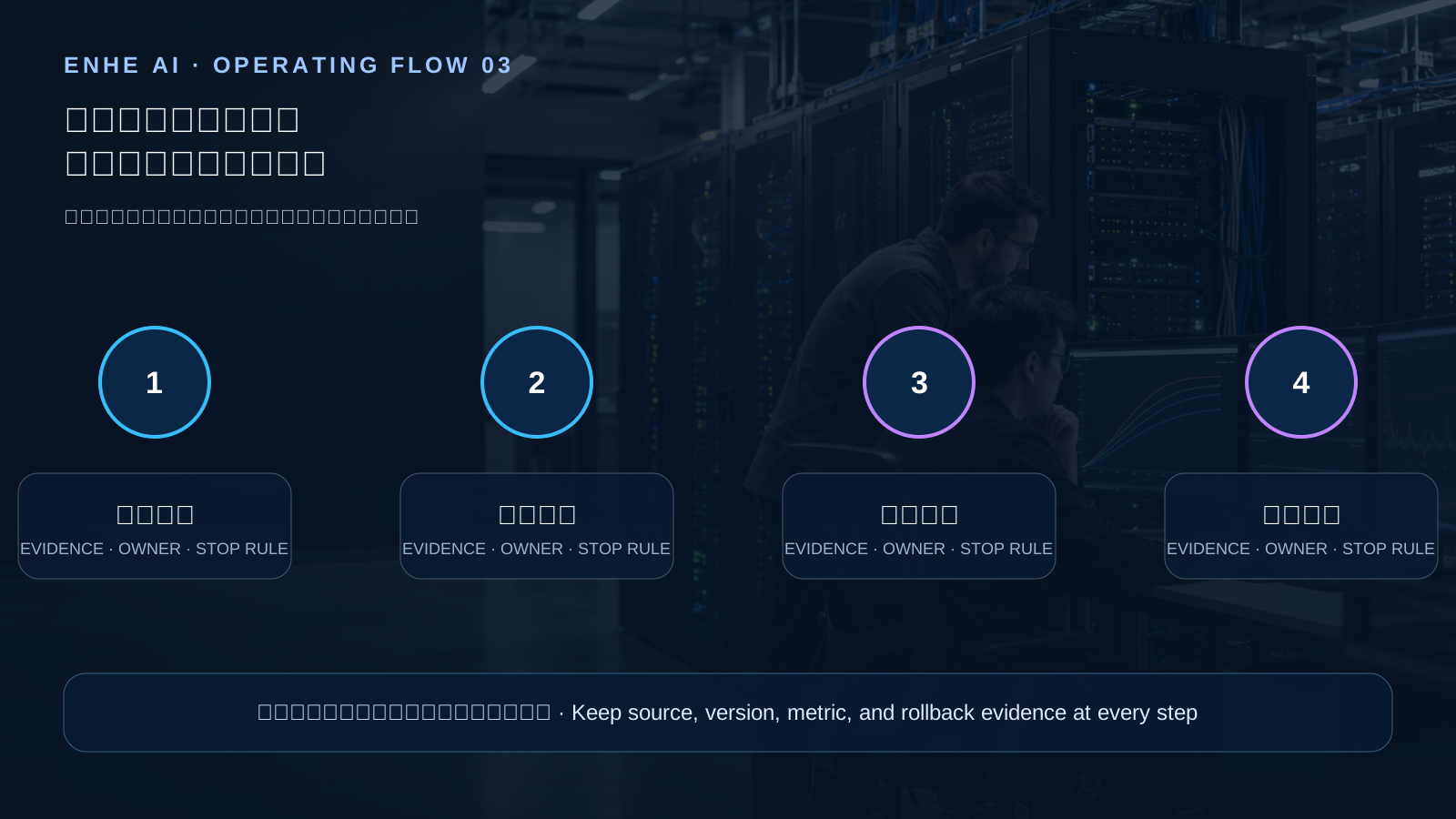
- Multiple workflows share one orchestration core.
- Version-pinned DAGs order dependent steps.
- Model agents process only assigned steps.
- Audit and tenant boundaries are centrally managed.
Impact for AI users
The architectural lesson is to place authorization, workflow versions, and auditability in the orchestration layer rather than asking prompts to enforce compliance by themselves. MHK’s percentages are case-specific, not a promise for other organizations. Before considering a healthcare or claims use case, define whether the model only organizes records or influences a decision, assign professional review for consequential judgments, and test tenant isolation, error handling, audit trails, and the human-review path.
Operating checklist
- Separate document processing, professional judgment, and final decisions.
- Keep inputs, outputs, and approvals for every workflow version.
- Test cross-tenant isolation and recovery in a controlled environment.
- Use qualified review for conclusions affecting care or claims.
AI frontier news and analysis, AI software and model tools, AI skill tutorials and validation methods, and AI account and permission guidance
FAQ
Does MHK’s 90 percent figure apply to other providers?
No. It is reported by MHK in an AWS customer story, without independent clinical validation in that article.
Does this mean models should replace clinicians or claims reviewers?
No. The article describes an architecture, not a recommendation to automate consequential decisions.
Summary
MHK’s case illustrates orchestration and audit patterns, while its reported efficiency figures should not be mistaken for clinical-safety evidence.
This is an AI-assisted draft and requires ENHE human review before public release.
What this means for everyday users
The architectural lesson is to place authorization, workflow versions, and auditability in the orchestration layer rather than asking prompts to enforce compliance by themselves. MHK’s percentages are case-specific, not a promise for other organizations. Before considering a healthcare or claims use case, define whether the model only organizes records or influences a decision, assign professional review for consequential judgments, and test tenant isolation, error handling, audit trails, and the human-review path.
Tools you may use



Related tutorials
Related Tools And Tutorials
Use the following ENHE AI sections to continue from the news signal into tool selection, account-service guidance, or practical learning.
Related reading
Nine-Stage AI Agent Evaluation Checklist: From First Commit to Production Drift
AWS published a nine-stage production AI-agent evaluation framework built around Amazon Bedrock AgentCore on October 16, 2026. It follows an agent from defining quality and comparing experiments through merge checks, deployment gates, canary scoring, adversarial testing, drift detection, live pulse monitoring, and feedback-driven improvement. The framework evaluates five dimensions—safety, quality, performance, cost, and operational control—at tool, individual-agent, and multi-agent levels. This durable guide converts the public framework into a vendor-neutral checklist for ordinary teams, with minimum evidence, ownership, and stop conditions designed to catch soft failures where latency and uptime remain normal while answer quality quietly declines over time.
Bedrock’s claims example pairs natural-language retrieval with citations and access filters
On September 30, AWS published a walkthrough for querying synthetic insurance claims with Amazon Bedrock Knowledge Bases. It indexes PDF, Word, and text records and returns answers with citations. AgenticRetrieveStream can break down multi-part questions, repeat retrieval, and expose trace events; metadata filters constrain the document set, while a contextual grounding check blocks unsupported responses. The post’s measurements use a 30-document synthetic corpus and a 40-question evaluation, and the reported baseline uses Retrieve and RetrieveAndGenerate rather than AgenticRetrieveStream. Those results are not evidence of production claims accuracy. Derive access filters from the authenticated server session, never from user text, and retain qualified claims review for conclusions that could affect a person’s benefits or rights.
A supervisor can update a contact-center agent by voice, after strong authentication
AWS described a voice-activated supervisor agent for Amazon Connect Customer and Bedrock on September 30. A supervisor calls from an approved number, verifies a PIN, and then uses MCP tools to manage customer-facing AI agents. The example includes nine tools for configuration, rollback, and testing; its system prompt requires confirmation before destructive actions and a test report after each change. Secrets Manager stores authentication data, and failed PIN attempts trigger rate limits and lockout. Voice reduces console navigation, but it also creates a path from spoken requests to production changes. Before deployment, teams need to verify identity controls, least-privilege tool access, approval rules, rollback, and alerting. The AWS example is an architecture pattern, not a substitute for an organization’s security review.
Three agents produce a track together on persistent AgentCore runtimes
On September 30, AWS published a hands-on example in which three specialized agents collaborate to render, generate, and clear a music track on Amazon Bedrock AgentCore Runtime Instances. The sample colocates agents on one GPU-backed instance, gives them persistent shared storage, and uses a shared session ID for handoffs and resumable work. AWS says Runtime Instances can host agents built with different frameworks; the walkthrough uses Strands and a file-backed session manager. It is an implementation example, not evidence of unattended production readiness. Deploying it provisions cloud resources such as runtimes, storage, and container repositories, so teams should estimate ongoing charges, narrow IAM permissions, and test cleanup and failure isolation before adapting the pattern.
Condé Nast turns 140,000 videos into multimodal search with results in under two minutes
AWS published a September 29 case study describing Condé Nast's multimodal search across more than 140,000 videos. The system uses TwelveLabs Marengo through Amazon Bedrock to create embeddings spanning visuals, audio, and transcripts, indexes them in Amazon OpenSearch Service, and returns relevant clips with precise timestamps. Condé Nast reports that average discovery time fell from 250 minutes to under two minutes in a May 2026 benchmarking workshop. The architecture separates asynchronous chunking and embedding generation from the online query tier, with retries, traceability, and multi-Availability-Zone resilience. Teams adopting the pattern should evaluate recall and false matches on real editorial queries, then verify access controls, content rights, indexing cost, backfill behavior, and availability before trusting headline productivity results.
A durable multi-account agent checklist that keeps data with its owning team
AWS published a multi-account AI-agent architecture on September 24. A central platform account runs the agent and model, while line-of-business accounts keep their data and expose only approved tools through MCP servers. AgentCore Gateway provides one endpoint for tool discovery, authentication, fine-grained authorization, and observability. This should become a durable governance task rather than a one-time deployment. Whenever an account, tool, model, or identity provider changes, recheck machine identity, user authorization, returned fields, tenant isolation, rate limits, cost ownership, and log completeness, then drill privilege escalation, expired credentials, tool-contract changes, and cross-account failures. Teams should reproduce the vendor's result with their own data, controls, workload, and operating limits before production adoption.