
Three agents produce a track together on persistent AgentCore runtimes
AWS demonstrates multi-agent handoffs with GPU-backed runtime instances, persistent volumes, and resumable sessions.

Key takeaways
On September 30, AWS published a hands-on example in which three specialized agents collaborate to render, generate, and clear a music track on Amazon Bedrock AgentCore Runtime Instances. The sample colocates agents on one GPU-backed instance, gives them persistent shared storage, and uses a shared session ID for handoffs and resumable work. AWS says Runtime Instances can host agents built with different frameworks; the walkthrough uses Strands and a file-backed session manager. It is an implementation example, not evidence of unattended production readiness. Deploying it provisions cloud resources such as runtimes, storage, and container repositories, so teams should estimate ongoing charges, narrow IAM permissions, and test cleanup and failure isolation before adapting the pattern.
Direct answer
On September 30, AWS published a hands-on example in which three specialized agents collaborate to render, generate, and clear a music track on Amazon Bedrock AgentCore Runtime Instances. The sample colocates agents on one GPU-backed instance, gives them persistent shared storage, and uses a shared session ID for handoffs and resumable work. AWS says Runtime Instances can host agents built with different frameworks; the walkthrough uses Strands and a file-backed session manager. It is an implementation example, not evidence of unattended production readiness. Deploying it provisions cloud resources such as runtimes, storage, and container repositories, so teams should estimate ongoing charges, narrow IAM permissions, and test cleanup and failure isolation before adapting the pattern.
Verified facts
AWS published the technical walkthrough on September 30, 2026; three agents render, generate, and clear a track.
The sample colocates agents on one GPU-backed instance, shares files through persistent volumes, and coordinates with a session ID.
The walkthrough uses Strands and file-backed sessions; deployment provisions billable runtimes, storage, and container resources.
What changed
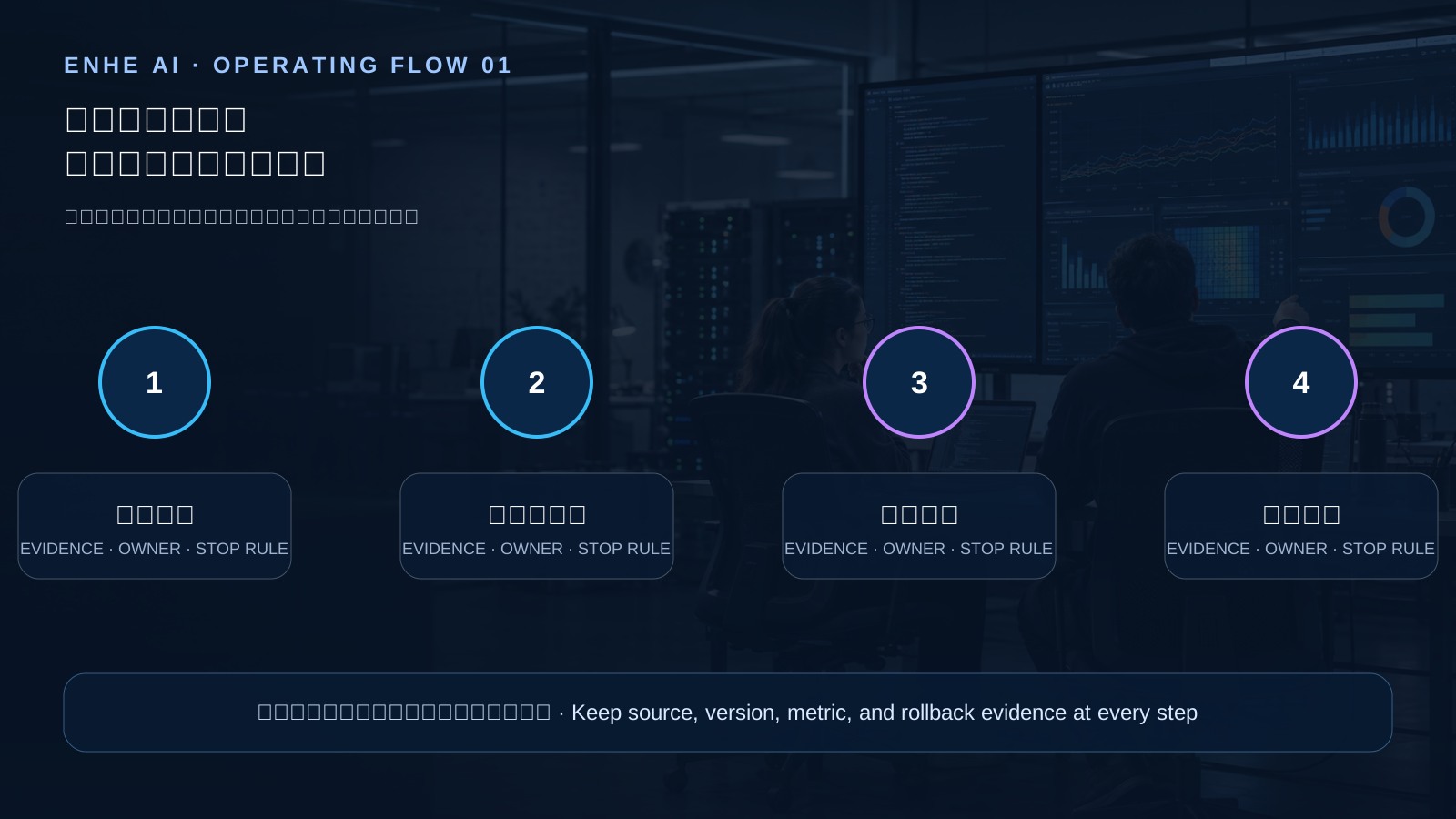
- Three role-specific agents hand off one track.
- A GPU capacity provider colocates runtimes.
- Persistent volumes preserve files and session state.
- Agent versions can be updated independently.
Impact for AI users
The useful pattern is a resumable shared workspace for bounded tasks, not simply splitting one prompt into more agents. Persistent storage and multi-day sessions reduce repeated setup but also expand the impact of shared data. For a real workload, define each agent’s readable and writable paths, handoff schema, retry limit, and cost ceiling first. If the workflow processes lyrics, samples, or generated audio, verify the rights and provenance of those materials as well.
Operating checklist
- Start with a short, non-sensitive workflow and a fixed human-scored sample set.
- Limit each agent’s directories, tools, GPU time, and retries.
- Test interruptions, duplicate handoffs, and consistency after recovery.
- Track resource charges, rework, and provenance for every output.
AI frontier news and analysis, AI software and model tools, AI skill tutorials and validation methods, and AI account and permission guidance
FAQ
Does the sample run indefinitely at no cost?
No. It provisions cloud resources; estimate charges for compute, storage, and duration before deployment.
Must every agent share every file?
No. Share only handoff artifacts and restrict access to other paths by role.
Summary
The example shows how agents can share a durable runtime; adoption still depends on measured task quality, isolation, and infrastructure cost.
This is an AI-assisted draft and requires ENHE human review before public release.
What this means for everyday users
The useful pattern is a resumable shared workspace for bounded tasks, not simply splitting one prompt into more agents. Persistent storage and multi-day sessions reduce repeated setup but also expand the impact of shared data. For a real workload, define each agent’s readable and writable paths, handoff schema, retry limit, and cost ceiling first. If the workflow processes lyrics, samples, or generated audio, verify the rights and provenance of those materials as well.
Tools you may use



Related tutorials
Related Tools And Tutorials
Use the following ENHE AI sections to continue from the news signal into tool selection, account-service guidance, or practical learning.
Related reading
SageMaker Studio Simplifies New-Customer Access: Credits, Setup, and Cost Boundaries
AWS announced a simplified path into Amazon SageMaker Studio for new customers on October 19, 2026. Eligible users can sign up with Amazon, Apple, GitHub, Google, or email in two or three steps, and most do not need to enter a credit card first. Studio is created in about 20 seconds. New customers receive $100 in Free Tier credits and may earn another $100; the free period ends after six months or when credits are exhausted, and resource usage then stops automatically. This article provides a bounded first-experiment checklist covering account eligibility, GPU quota visibility, endpoint shutdown, credit monitoring, and the decision point before a paid upgrade.
Nine-Stage AI Agent Evaluation Checklist: From First Commit to Production Drift
AWS published a nine-stage production AI-agent evaluation framework built around Amazon Bedrock AgentCore on October 16, 2026. It follows an agent from defining quality and comparing experiments through merge checks, deployment gates, canary scoring, adversarial testing, drift detection, live pulse monitoring, and feedback-driven improvement. The framework evaluates five dimensions—safety, quality, performance, cost, and operational control—at tool, individual-agent, and multi-agent levels. This durable guide converts the public framework into a vendor-neutral checklist for ordinary teams, with minimum evidence, ownership, and stop conditions designed to catch soft failures where latency and uptime remain normal while answer quality quietly declines over time.
Intel Details GPU D-Series for Open and Heterogeneous Agentic AI Inference
Intel published new details for its GPU D-series on October 12, 2026 at the OCP Global Summit. The accelerator is described with up to 480 GB of LPDDR5X memory, a standard PCIe form factor, air cooling, and support for long-context, large-model, and concurrent inference workloads. Customer sampling is underway, but the announcement does not provide general availability, retail pricing, or independent task results. This article explains what developers and smaller teams can do now: describe the actual model and concurrency target, verify framework and runtime support, measure memory and power limits, compare cloud rental with owned hardware, test output quality and latency, and delay procurement until a reproducible configuration and support path exist.
Google Open-Sources ML Drift for On-Device AI GPU Inference
Google AI Edge open-sourced ML Drift on October 8, 2026 under the Apache 2.0 license. The cross-platform GPU inference engine supports OpenGL ES, OpenCL, Metal, and WebGPU and now serves as the core GPU acceleration engine in LiteRT for mobile, web, and desktop workloads. Google says the legacy TensorFlow Lite GPU delegate will no longer receive new feature updates and recommends moving to the LiteRT ML Drift accelerator, while claiming backward compatibility for existing models. Migration should still be evidence-driven. Teams need to run the same representative models on supported devices, compare output quality, startup and steady-state latency, peak memory, battery or power behavior, binary size, and fallback behavior, then keep the old path available until release telemetry proves the new accelerator is stable.
Qwen3-TTS reaches managed SageMaker endpoints for real-time voice cloning
AWS published a deployment guide for Qwen3-TTS-12Hz-1.7B-Base on Amazon SageMaker AI on September 25. Teams can create a managed GPU endpoint from SageMaker JumpStart, send target text with a reference recording and transcript, and receive 24 kHz speech without retraining the model. The guide also exposes model latency, platform overhead, per-instance invocation volume, concurrency, and error metrics for capacity planning. Voice cloning reproduces a person's vocal identity, so production use still requires explicit speaker permission, synthetic-media disclosure, tightly controlled reference audio, anti-impersonation tests, and operational paths for consent withdrawal, access review, and deletion. Teams should reproduce the vendor's result with their own data, controls, workload, and operating limits before production adoption.
HyperPod and Qumulo bring remote training data close to local throughput
AWS published a cross-region training validation using SageMaker HyperPod and Qumulo on September 25. Data remained in the Ohio region while compute ran in Oregon, with Cloud Data Fabric and NeuralCache presenting the same local mount path. AWS reports that, despite roughly 60 milliseconds of network latency, the remote cluster reached 115 to 117 samples per second after a 100-to-150-batch warmup, matching the co-located cluster. Cold-start batches were slower, while the warm cache reached a 94-to-96-percent hit rate. These results use a specific LLaMA model, two p5.48xlarge instances, and a fixed data-loader pattern, so teams need matched local and remote baselines.