
Microsoft sets five principles for safer, educator-led AI in education
The framework centers privacy and transparency, educator control, student thinking, system capacity, and preparation for an AI-enabled future.
Microsoft published five principles for AI in education on September 16: safety, privacy, security, and transparency by design; educators in control; AI that supports rather than replaces student thinking; stronger education systems; and preparation for an AI-enabled future. The post also describes a school privacy and safety standard developed with the American Federation of Teachers that limits student and educator data use, requires human oversight for consequential decisions, provides family transparency, and affirms school ownership of knowledge and ideas. Institutions need to turn these principles into testable procurement, classroom, and incident controls. That includes data maps, educator review points, learner alternatives, disclosure, and appeal paths before classroom deployment.

Key takeaways
Direct answer
Microsoft published five principles for AI in education on September 16: safety, privacy, security, and transparency by design; educators in control; AI that supports rather than replaces student thinking; stronger education systems; and preparation for an AI-enabled future. The post also describes a school privacy and safety standard developed with the American Federation of Teachers that limits student and educator data use, requires human oversight for consequential decisions, provides family transparency, and affirms school ownership of knowledge and ideas. Institutions need to turn these principles into testable procurement, classroom, and incident controls. That includes data maps, educator review points, learner alternatives, disclosure, and appeal paths before classroom deployment.
Verified facts
Microsoft lists five principles spanning safety and transparency by design, educator control, student thinking, system capacity, and AI readiness.
Its school privacy and safety standard limits use of student and educator data and requires human oversight for consequential decisions.
The standard calls for meaningful family transparency and affirms school ownership of the knowledge and ideas it creates.
What changed
- Education AI moves from feature lists to governing principles
- Educator judgment precedes automation
- Consequential decisions retain human oversight
- School knowledge and data rights enter procurement criteria
Impact for AI users
Schools and training providers should define which data may enter a model, who reviews outputs, whether learners have an alternative path, and how families and students receive notice. Efficiency metrics do not replace learning quality, and qualified people must remain responsible for decisions affecting grades, support, or other consequential interests.
Operating checklist
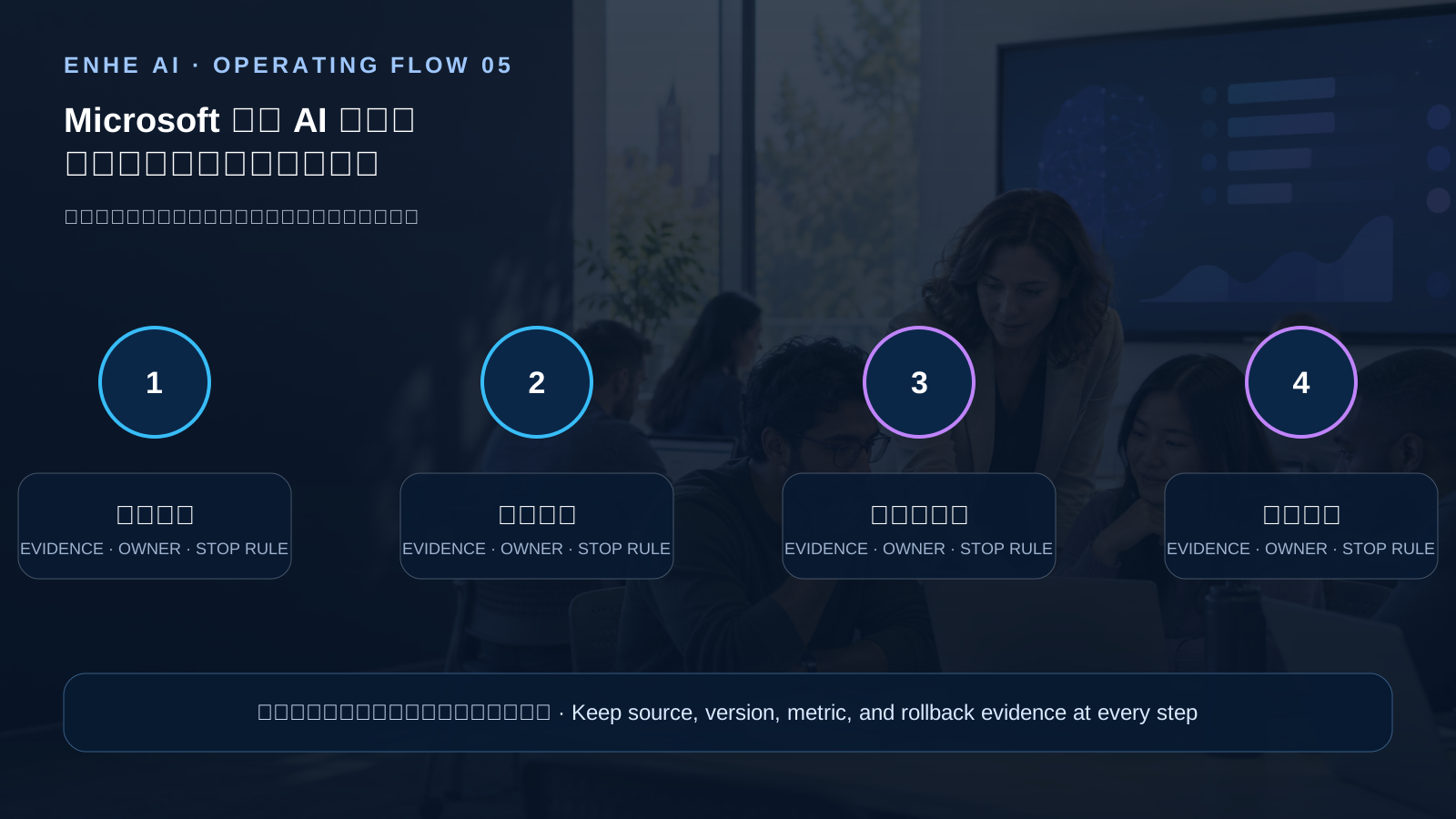
- Convert the five principles into procurement acceptance criteria
- Map collection, use, and deletion paths for student and educator data
- Mark decisions that always require educator review
- Review learning quality, bias, and appeals each term
AI frontier news and analysis, AI software and model tools, AI skill tutorials and validation methods, and AI account and permission guidance
FAQ
Do the principles allow AI to make consequential student decisions alone?
The post requires human oversight for consequential decisions and places educators at the center.
Does a school lose rights to its own work?
The described standard affirms school ownership of the knowledge and ideas it creates.
Summary
Trusted education AI depends on turning educator control, data boundaries, and appealable human decisions into daily operations rather than leaving them as principles.
This AI-assisted article is checked by ENHE AI automation for official sources, bilingual fields, media rights, page safety, and historical duplication before publication.
What this means for everyday users
Schools and training providers should define which data may enter a model, who reviews outputs, whether learners have an alternative path, and how families and students receive notice. Efficiency metrics do not replace learning quality, and qualified people must remain responsible for decisions affecting grades, support, or other consequential interests.
Tools you may use


Related reading
How Does an AI Pilot Become an Acceptable Workflow? Define Baseline, Ownership, and Rollback
Microsoft published several AI-transformation cases on November 12, 2026 and summarized a recurring pattern: start from value, redesign the process rather than one task, build in fast cycles with the customer team, and include security, governance, and cost management from day one. This durable guide converts that pattern into a one-page pilot charter. Record the current workflow and observation window, define inputs and final deliverable, name the human owner, separate assistance from final authority, set acceptance and cost limits, describe failure and rollback, and compare results over the same window. If local data is unavailable, mark it unknown rather than importing Microsoft customer figures as a forecast.
@GitHub Is GA in Slack and Teams: How to Validate Canvas and Work Attribution
GitHub announced on 2026-11-06 that @GitHub in Slack and Microsoft Teams is generally available. Teams can investigate bugs, create issues, implement changes, and open pull requests from a conversation. Teams Canvas adds a side-by-side place to review plans, code changes, and previews, while issues and pull requests created by @GitHub now record that they came from a Slack or Teams conversation and include the username. This guide provides a controlled first run: start with a read-only investigation, confirm the repository and permissions, inspect the plan and diff in Canvas, verify attribution on the created work item, require tests and code-owner review, and keep merge and deployment outside the chat task.
Meta Provides $2 Million to Five US Universities: Medical AI Projects Remain Research Work
Meta announced partnerships with five US universities, providing a total of two million dollars in grants and access to its latest models for medical and scientific research. The cited projects include detecting infant tracheal-tube displacement, supporting natural conversation for people with dementia, and predicting risk related to heart failure with preserved ejection fraction. These are research programs, not evidence that a diagnostic or treatment product is clinically available. This article helps researchers and general readers separate a project objective from engineering design and clinical evidence by checking data authority, endpoint definition, external validation, human oversight, failure reporting, and public wording. It offers no medical advice and makes no claim of regulatory approval.
GitHub Copilot SDK Is Becoming Microsoft Copilot SDK: What Existing Projects Should Change Now
GitHub says GitHub Copilot SDK will transition in phases to Microsoft Copilot SDK, creating a shared agent foundation across Microsoft and GitHub products while applications retain control of prompts, tools, policies, and their own experience. Existing users do not need to make immediate changes, and current packages, namespaces, or documentation may still use the old name during the transition. This guide turns the announcement into a practical migration-readiness checklist: inventory dependencies, record authentication and billing assumptions, preserve behavioral baselines, monitor official package guidance, and rehearse rollback before changing production code. It does not claim a completed package migration or a universal release date.
GitHub Copilot Cloud Sessions Are GA: How Cross-Device Work Uses Actions Entitlement
GitHub made its connected Copilot cloud experience and cloud sandboxes generally available on paid Copilot plans on October 28, 2026. A user can start a task on github.com, GitHub Mobile, Copilot CLI, the Copilot app, VS Code, Slack, or Microsoft Teams, then continue the same session elsewhere. The included Actions compute entitlement becomes one shared, dollar-based pool for standard hosted runners, cloud sandboxes, and certain larger runners. Billing for cloud-sandbox usage begins in November 2026, so cross-device convenience can affect the same budget used by builds. This article helps users check repository scope, write access, tool permissions, entitlement consumption, and stop conditions before their first cloud session.
How to Choose Microsoft Foundry Copilot Harness: Managed Agents, Hosted Agents, and Cost Checklist
Microsoft introduced the Copilot harness in Foundry Agent Service in public preview on October 28, 2026, while long-running resilience for hosted agents became generally available. The managed harness supplies an agent loop and sandbox with reusable skills, connected tools, file execution, bounded delegation, and source-controlled agent definitions. Existing agents do not switch automatically, and the harness cannot be changed after creation during the preview. Billing for harness runtime begins on December 1, 2026; model inference, tools, and connected services remain separately billed. This guide compares prompt agents, managed-harness agents, and hosted agents through control, recovery, idempotency, pricing, and verification requirements before a team commits to an architecture.