Project overview
Go Recipes is a resource list of tools and practical recipes for Go projects, hosted in the nikolaydubina/go-recipes repository. Its README groups entries by task and includes tool descriptions, usage examples, and installation requirements for some entries.
It is browsable reference material, not an application with a single entry point, and does not require installation as a whole.
Use cases
- Reviewing test coverage: find coverage viewers, coverage drop detection, test reports, and slow-test analysis tools.
- Maintaining dependencies: find dependency updates, module version queries, dependency graphs, and dependency license collection methods.
- Understanding code structure: find tools for generating function call graphs, package graphs, and diagrams of structs, interfaces, and their relationships.
- Improving everyday development workflows: find resources for code generation, refactoring, builds, runtime monitoring, performance analysis, and static checks.
What it does and problems it solves
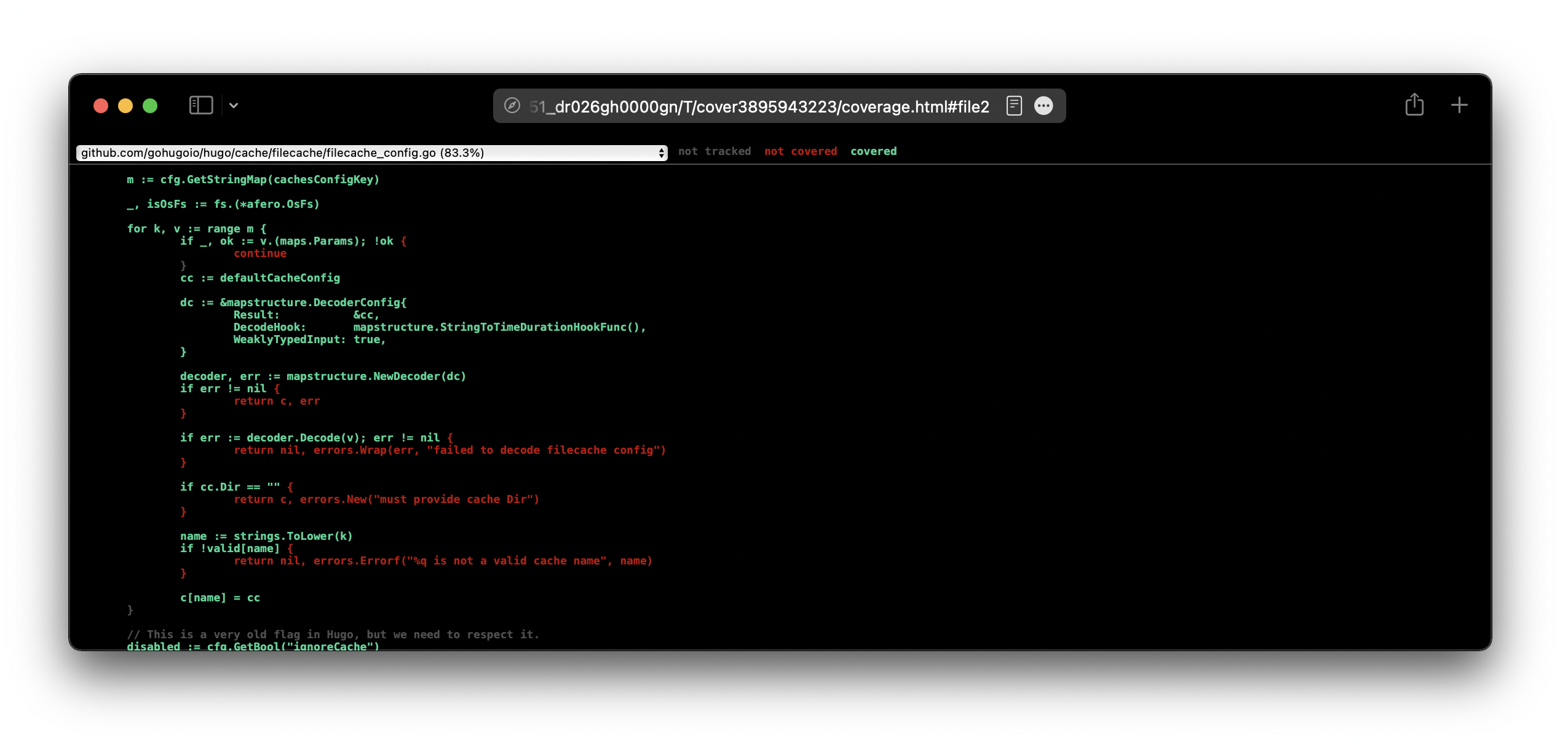
The list brings together tools and examples for different development tasks, helping readers start with the task they need to accomplish. For example, the testing section explains how to browse coverage with Go's own tools and lists third-party tools for coverage treemaps and test summaries. The dependencies section provides methods for querying versions and exploring dependency relationships.
Entries vary in detail: some include commands and requirements, while others offer only an introduction or further reading. The list is therefore a starting point for finding methods, rather than a replacement for each tool's full documentation or evidence that every tool is configured and verified to work.
How to use
1. Open Go Recipes through the original repository entry below this page and browse the table of contents at the top of the README.
2. Choose a category for your task: use “Test” for testing, “Dependencies” for dependencies, or “Code Visualization” for understanding code relationships. Category filtering here means navigating the table of contents by topic.
3. Open the relevant entry and read its purpose, command examples, and “Requirements.” For more details, follow the tool entry in the original README to the selected project's repository.
4. To view test coverage for an existing Go project, open a command window in that project's folder. Run `go test -coverprofile cover.out ./...` to generate a coverage file, then run `go tool cover -html=cover.out` to browse the results. Both commands come from the README's coverage browsing example.
5. If you choose a third-party tool, complete that entry's required setup before using its examples. Commands from separate entries are not a single workflow that must be executed in full.
Installation
1. Browsing the Go Recipes list requires no installation or repository clone.
2. To use an individual tool, open its entry and check “Requirements.” For example, the gotestsum and go-cover-treemap entries each provide their own `go install` command. Obtain the corresponding complete command from the original README.
3. For entries requiring additional components, prepare the components listed there. For example, some dependency graph examples also list Graphviz and jq; these requirements do not apply to every entry in the list.
4. The supplied material does not provide a unified Go environment installation procedure, a Go version applicable to every entry, or operating system requirements covering all entries. If environment setup, tool versions, or installation details are missing, consult the original repository and the selected tool's documentation before proceeding.
Source and usage notes
- Original repository: https://github.com/nikolaydubina/go-recipes
- Source revision: bcead170e0386c351cd6a284d664c50ef4f7a7cd
This listing links to the upstream repository. It does not provide a verified download package, and the complete workflow has not been independently validated.
This description was organized and translated with AI from public upstream material. Refer to the original repository for capabilities, setup requirements, costs, and license terms.