
Kiro Crew carries network-operations lessons forward, with review before reuse
AWS describes persistent memory and staged skills that carry an engineer’s corrections into later investigations.

Key takeaways
AWS described a Kiro Crew network-operations example on September 30. When an alert arrives, an agent investigates telemetry, topology, and incident records; a network engineer can add context to distinguish competing causes. Confirmed lessons may persist for later investigations, while repeatedly useful procedures can be staged as candidate skills for human review. The article’s cable-access diagnosis is illustrative and does not establish that the system autonomously operates production networks. The practical change is that an investigation can carry context beyond one conversation. Operators should retain provenance, scope, confidence, and a review date for each stored lesson, and require an engineer to approve any action that could change live network configuration.
Direct answer
AWS described a Kiro Crew network-operations example on September 30. When an alert arrives, an agent investigates telemetry, topology, and incident records; a network engineer can add context to distinguish competing causes. Confirmed lessons may persist for later investigations, while repeatedly useful procedures can be staged as candidate skills for human review. The article’s cable-access diagnosis is illustrative and does not establish that the system autonomously operates production networks. The practical change is that an investigation can carry context beyond one conversation. Operators should retain provenance, scope, confidence, and a review date for each stored lesson, and require an engineer to approve any action that could change live network configuration.
Verified facts
AWS described Kiro Crew on September 30, 2026, as a Kiro CLI workspace using the Agent Client Protocol.
Persistent memory can carry operator preferences, project context, and corrections into later sessions.
Generated procedures are staged as candidate skills; provenance, scope, confidence, and engineer review remain important.
What changed
- Investigations can persist across sessions.
- Engineer corrections can inform later work.
- Repeated procedures can become candidate skills.
- Candidates still need review before activation.
Impact for AI users
Persistent memory reduces repeated explanations, but it can also preserve a mistaken lesson. Treat each memory as versioned operational knowledge: keep its evidence links and originating alert, set an expiry or review date, and revalidate after topology, firmware, or policy changes. Begin with read-only investigation and add low-risk actions gradually. High-impact steps such as disabling links or changing configuration should retain an explicit human confirmation.
Operating checklist
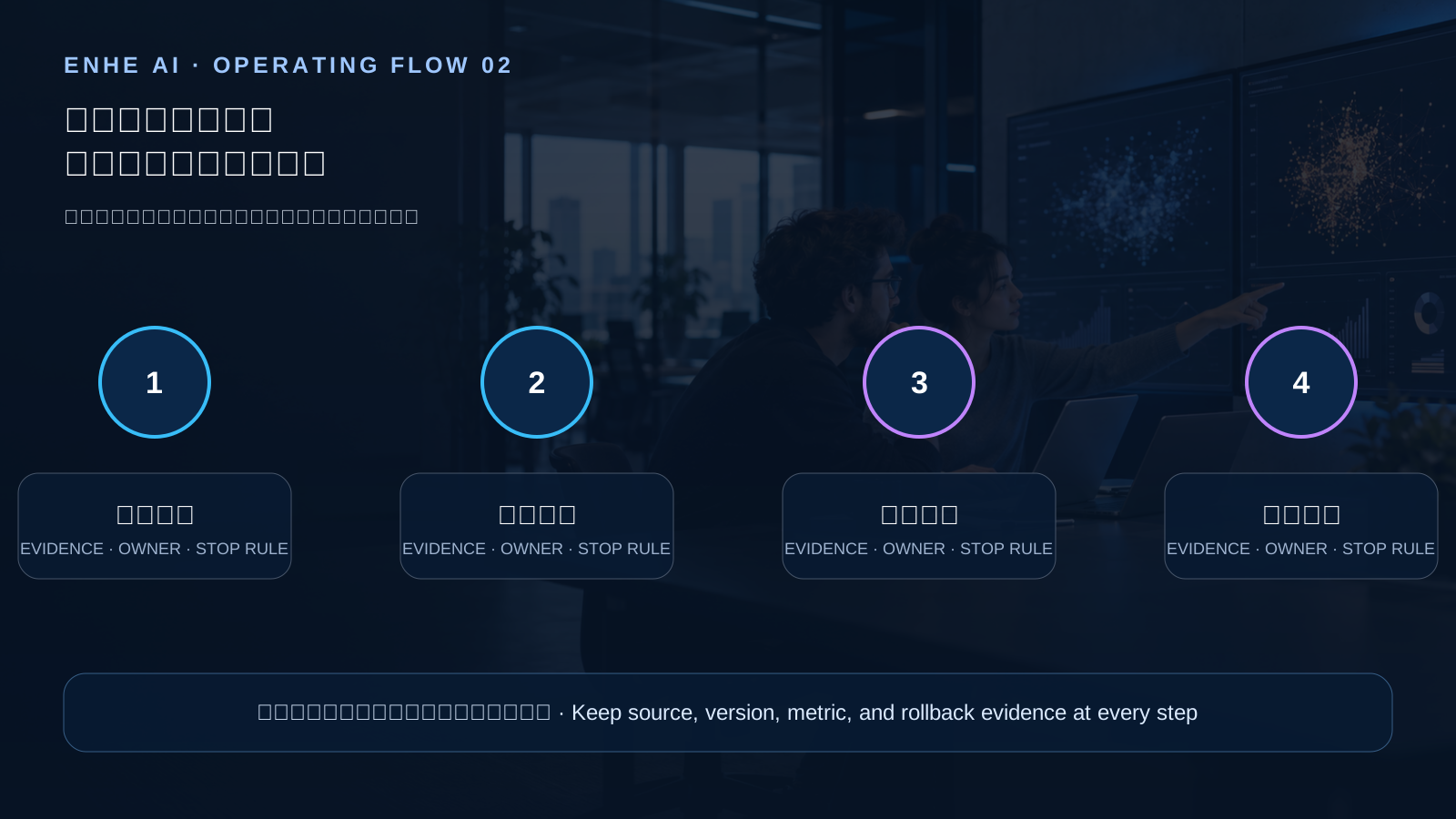
- Start with read-only collection of alerts, topology, and logs.
- Attach evidence, scope, and a review date to every memory.
- Validate candidate skills against incident replays, not live changes.
- Record engineer approval, rollback steps, and an emergency stop.
AI frontier news and analysis, AI software and model tools, AI skill tutorials and validation methods, and AI account and permission guidance
FAQ
Does the agent turn guesses into official procedures automatically?
The article describes staged candidate skills; engineers should review procedures before reuse.
Is the example proof of autonomous production control?
No. Begin with read-only diagnostics and require authorization for high-impact actions.
Summary
Kiro Crew illustrates an agent that can retain operational lessons; safe reuse depends on provenance, review, and bounded actions.
This is an AI-assisted draft and requires ENHE human review before public release.
What this means for everyday users
Persistent memory reduces repeated explanations, but it can also preserve a mistaken lesson. Treat each memory as versioned operational knowledge: keep its evidence links and originating alert, set an expiry or review date, and revalidate after topology, firmware, or policy changes. Begin with read-only investigation and add low-risk actions gradually. High-impact steps such as disabling links or changing configuration should retain an explicit human confirmation.
Tools you may use


Related tutorials
Related Tools And Tutorials
Use the following ENHE AI sections to continue from the news signal into tool selection, account-service guidance, or practical learning.
Related reading
SageMaker Studio Simplifies New-Customer Access: Credits, Setup, and Cost Boundaries
AWS announced a simplified path into Amazon SageMaker Studio for new customers on October 19, 2026. Eligible users can sign up with Amazon, Apple, GitHub, Google, or email in two or three steps, and most do not need to enter a credit card first. Studio is created in about 20 seconds. New customers receive $100 in Free Tier credits and may earn another $100; the free period ends after six months or when credits are exhausted, and resource usage then stops automatically. This article provides a bounded first-experiment checklist covering account eligibility, GPU quota visibility, endpoint shutdown, credit monitoring, and the decision point before a paid upgrade.
Smartsheet MCP Is Generally Available for Amazon Quick and Kiro Workflows
AWS has published a guide to the generally available Smartsheet MCP Server, which exposes more than forty tools for reading, writing, and managing sheets, rows, columns, and automations. Business users can connect through Amazon Quick, while developers can configure the server in Kiro. This article compares the two paths, lists the documented account, authentication, and regional requirements, and proposes a safe first task: identify blocked work and produce a review checklist without writing changes. Only after results, user permissions, and organization controls are verified should a team enable a narrowly scoped write action. Natural-language requests do not grant extra access, and a connected agent should not be treated as an unrestricted project administrator.
When Should an AI Agent Act Autonomously? A Scope, Know, Bound, Observe Checklist
An AI agent should receive more autonomy only when its actions can be verified, not because one demonstration looked successful. AWS describes a Trust in Depth framework organized around four lifecycle questions: Scope, Know, Bound, and Observe. This durable guide turns those questions into an operational checklist for a small team. Using an internal task-status update as the example, it identifies evidence required before launch, controls during execution, records after execution, and conditions that should stop the agent and request human review. Precise rules can sometimes be tested or formally checked, while tone, sensitive context, and high-impact decisions still require judgment. The objective is bounded, reviewable autonomy rather than either constant approval or unrestricted action.
Gemini Launches a Small-Business Hub for Brand Assets, Connected Apps, and Finance
Google has introduced a dedicated business landing page in the Gemini app for small-business tasks such as brand building, marketing, finance analysis, and customer insights. The announcement also lists connections to Google Business Profile, Ads, Workspace, and third-party apps including Canva, Shopify, Xero, and others. This article explains the global rollout wording and offers a practical two-part workflow: prepare a brand brief for a weekend promotion, then turn verified expense data into a reviewable chart. It emphasizes minimal app connections, source checking, and human approval before publication or financial use. The release can reduce context switching, but it does not mean every account receives the hub immediately or that generated claims, graphics, and numbers are ready to use without review.
Google Meet Post-Meeting Follow-Up: A Review Checklist for Drafts and Tasks
A meeting summary is not the same as a reliable follow-up. Google Meet’s post-meeting next steps can help create an email draft or move action items into Google Tasks, but eligibility and review still matter. This durable checklist explains the documented prerequisites, the stricter conditions for drafting follow-up emails, and the difference between a generated draft and a message actually sent. It uses a fictional external-project meeting to show how to check owners, deliverables, deadlines, and recipients without inventing missing commitments. It also covers where to inspect routine activity, how to turn a routine off, and a manual fallback when the feature is absent. No meeting-account test is claimed.
Reflection Beam Arrives on AWS: How to Choose an Agentic Coding Deployment
AWS introduced Reflection AI's Beam on October 16, 2026 as an open-weight model for agentic coding and long-horizon work. Beam is designed to resolve software issues, modify code, call tools, interpret intermediate results, and continue multi-step workflows. AWS describes a sparse mixture-of-experts architecture with 501 billion total parameters, 23 billion active parameters, and an effective one-million-token context length reported by Reflection. Weights are released under Apache 2.0 in BF16, FP8, and NVFP4 variants. This guide separates the managed SageMaker JumpStart path from the more controllable HyperPod route and explains the operational evidence teams should collect before trusting either in real projects.