
Google's Gemini RLFT guide puts reward design at the center of quality control
Google Cloud explains when managed RLFT fits, how rewards fail, and how to separate evaluation data and stopping rules.

Key takeaways
Google Cloud published a practical guide to Gemini reinforcement-learning fine-tuning on September 25. Its managed RLFT service lets teams provide prompts and a reward function while the platform handles training infrastructure and proprietary model internals. Google says the method fits tasks that are difficult to demonstrate but easy to score, and only when the base model already succeeds some of the time. Prompting and supervised fine-tuning should be exhausted first. The reward function is the main control surface, so teams need offline tests for malformed outputs, length bias, reward hacking, and train-evaluation leakage, then should stop at validation saturation rather than automatically choosing the last checkpoint.
Direct answer
Google Cloud published a practical guide to Gemini reinforcement-learning fine-tuning on September 25. Its managed RLFT service lets teams provide prompts and a reward function while the platform handles training infrastructure and proprietary model internals. Google says the method fits tasks that are difficult to demonstrate but easy to score, and only when the base model already succeeds some of the time. Prompting and supervised fine-tuning should be exhausted first. The reward function is the main control surface, so teams need offline tests for malformed outputs, length bias, reward hacking, and train-evaluation leakage, then should stop at validation saturation rather than automatically choosing the last checkpoint.
Verified facts
Google Cloud published a managed Gemini RLFT best-practices guide on September 25, 2026.
Teams provide prompts and a reward function while the service manages infrastructure and model internals.
Google recommends exhausting prompting and SFT first and validating reward hacking, data separation, and stopping criteria.

What changed
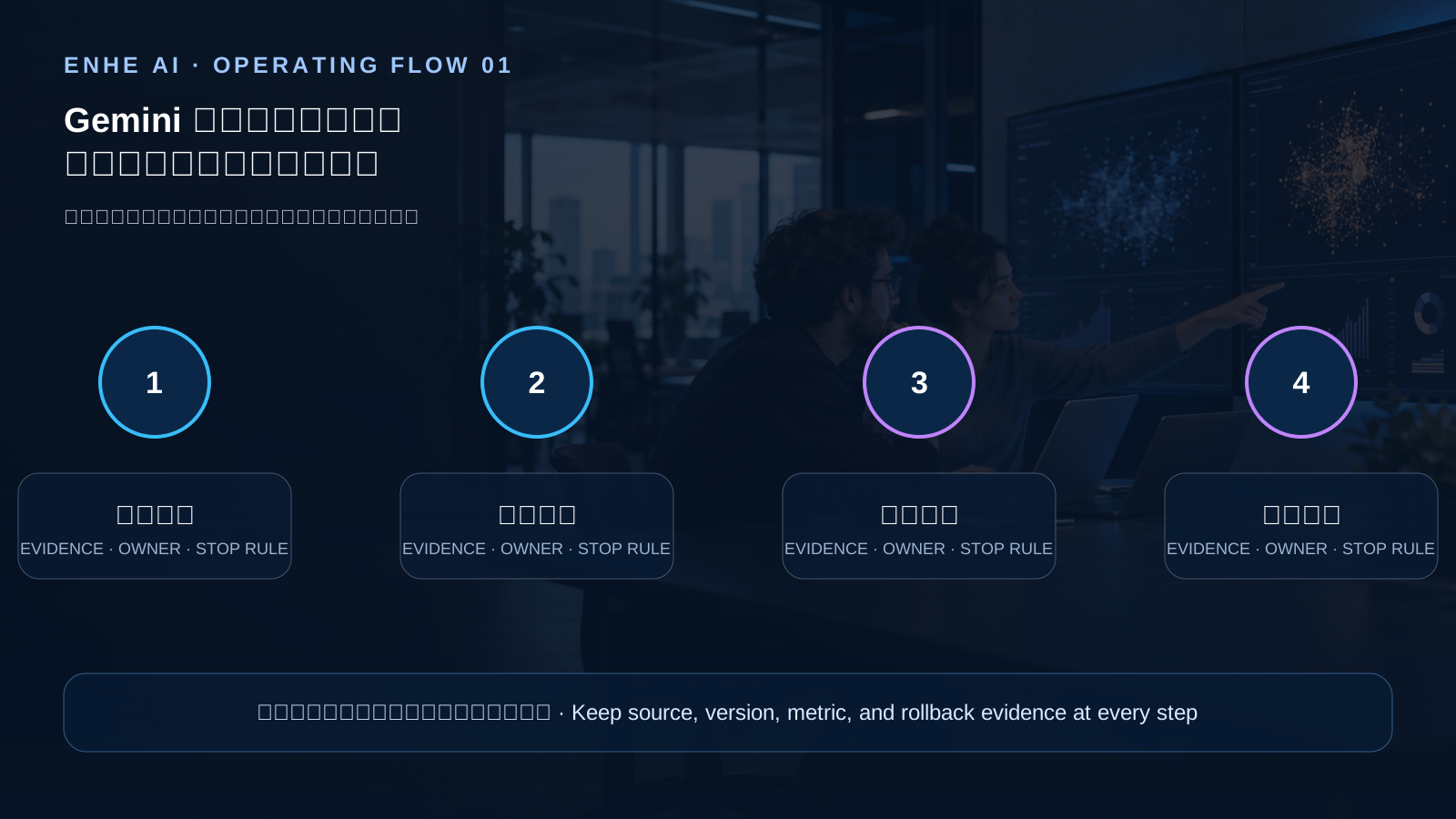
- Gemini gains a managed RLFT workflow
- A reward function replaces fixed target answers
- Continuous tuning can continue from an SFT checkpoint
- Validation saturation becomes a stopping signal
Impact for AI users
Model teams should create a held-out evaluation set before training and encode the business outcome in a repeatable reward function. Every reward needs cases for invalid formats, verbosity, empty output, and shortcut behavior, plus correlation checks against human review. Track training and validation reward together, and stop when they diverge, validation plateaus, or an unrelated capability regresses, retaining a rollback checkpoint.
Operating checklist
- Create an isolated fixed evaluation set
- Attack and calibrate the reward offline
- Monitor training and validation reward together
- Retain checkpoints and define rollback thresholds
AI frontier news and analysis, AI software and model tools, AI skill tutorials and validation methods, and AI account and permission guidance
FAQ
Does RLFT replace prompting and SFT?
No. Google recommends exhausting prompting and SFT before choosing RLFT.
Does a rising training reward prove better quality?
No. Reward hacking or leakage can raise the score, so held-out evaluation and human sampling remain necessary.
Summary
RLFT is not an automatic quality button; improvements are credible only when rewards, evaluation, and stopping rules are independently testable.
This AI-assisted article is checked by ENHE AI automation for official sources, bilingual fields, media rights, page safety, and historical duplication before publication.
What this means for everyday users
Model teams should create a held-out evaluation set before training and encode the business outcome in a repeatable reward function. Every reward needs cases for invalid formats, verbosity, empty output, and shortcut behavior, plus correlation checks against human review. Track training and validation reward together, and stop when they diverge, validation plateaus, or an unrelated capability regresses, retaining a rollback checkpoint.
Tools you may use



Related tutorials
Related Tools And Tutorials
Use the following ENHE AI sections to continue from the news signal into tool selection, account-service guidance, or practical learning.
Related reading
Gemini Personal Intelligence Reaches Cars: Android Auto Access and Privacy Controls
Google has announced Personal Intelligence for Gemini in cars, adding an optional way to use information from connected Google apps while driving. The rollout covers eligible personal accounts rather than Workspace business, enterprise, or education accounts, and several regions are excluded. This article explains the October 20 announcement, the opt-in privacy control, and the difference between Android Auto timing and cars with Google built-in. It also provides a low-risk flight-gate example with a clear verification step. The goal is to help drivers decide whether the feature is available and useful without treating a spoken answer as the final source for travel changes, appointments, payments, or other consequential decisions.
Gemini Launches a Small-Business Hub for Brand Assets, Connected Apps, and Finance
Google has introduced a dedicated business landing page in the Gemini app for small-business tasks such as brand building, marketing, finance analysis, and customer insights. The announcement also lists connections to Google Business Profile, Ads, Workspace, and third-party apps including Canva, Shopify, Xero, and others. This article explains the global rollout wording and offers a practical two-part workflow: prepare a brand brief for a weekend promotion, then turn verified expense data into a reviewable chart. It emphasizes minimal app connections, source checking, and human approval before publication or financial use. The release can reduce context switching, but it does not mean every account receives the hub immediately or that generated claims, graphics, and numbers are ready to use without review.
Gemini Skills Begin Rolling Out as Workspace Skills Are Delayed
Google’s latest rollout update separates two things that are easy to confuse: skills in the Gemini app and skills inside Workspace. The app rollout begins gradually and is expected to finish by mid-November, while the Workspace launch is delayed pending a revised timeline. For creators, the practical opportunity is to prepare a reusable writing routine rather than assume a scheduled publishing system is already available. This article provides a bounded article-rewrite example, explains where the documented Skills entry point lives, and distinguishes reusable instructions from background scheduling. It also flags account requirements and features still promised for later. The example is a preparation checklist, not a claim of hands-on access or automatic publication.
Microsoft and NVIDIA Publish an Open-Weight Model Risk Guide With Five Risk Categories
Microsoft and NVIDIA published their first joint resource for enterprise open-weight model risk management on October 16, 2026. The guidance organizes discussion into five broad categories: cybersecurity, data protection, content, human-AI interaction, and bias. Its central point is that weight openness alone does not determine risk; the model, intended use, deployment architecture, users, data, tools, and safeguards all shape the actual system. It also distinguishes model access from deployment choice and warns that self-operated deployments can transfer controls from a managed provider to the enterprise. This article turns the framework into a practical selection, ownership, evaluation, and review checklist for ordinary teams.
Gemini 4 Argon Is Now Available: Where Users and Developers Can Access It
Google announced Gemini 4 Argon availability on October 13, 2026. Google AI Pro and Ultra subscribers can use it in the Gemini app, including a task mode for longer work, while developers can access the model through the paid Gemini API tier, Google AI Studio, and Android Studio. Google AI Ultra subscribers can also try it in the Antigravity agent-first development environment. The rollout spans consumer, coding, and API surfaces, but the access terms are not identical. This article separates current availability from product claims and gives users a practical test: choose one bounded task, record the entry point and model, review connected apps, require confirmation for external actions, inspect sources and outputs, and keep a manual fallback for failures.
How to Choose Claude Haiku 5.5 for High-Volume AI Work
Anthropic released Claude Haiku 5.5 on October 7, 2026 for high-volume, cost-sensitive work such as summaries, compaction, classification, database queries, customer support, browser use, and coding subagents. Anthropic says the model costs about 75% less to run on average than Haiku 4.5 and adds adjustable effort, while still positioning larger Sonnet and Opus models for harder agentic coding. GitHub Copilot now offers Haiku 5.5 across multiple paid plans and clients, with usage billed at provider list pricing and gradual rollout. A durable selection decision should not rely on the word 'small' or a benchmark headline. This guide shows how to segment tasks, create a representative test set, measure correct completions, latency, tokens, tool success, and human correction, then choose a fallback for work that exceeds the small model's reliable boundary.