
Concurrency-sweep checklist finds an inference endpoint's safe capacity
Increase representative load in controlled steps, map throughput against latency, and stop before SLA, error, or cost limits are crossed.

Key takeaways
AWS described a concurrency-sweep method for SageMaker AI generative-AI endpoints on September 22. A benchmark job can test a fixed list of concurrency levels or use the max-concurrency-under-sla recipe to search for the highest load that still satisfies latency targets. The durable practice is broader than one service: replay representative input and output lengths, increase concurrent requests in controlled steps, and plot throughput against tail latency to locate saturation. Record errors, token rates, accelerator use, and cost at every step. Run the test in an isolated environment with explicit stop conditions, keep the selected setting below the unstable edge, repeat after model or serving changes, and delete billable endpoints, configurations, and models when testing ends.
Direct answer
AWS described a concurrency-sweep method for SageMaker AI generative-AI endpoints on September 22. A benchmark job can test a fixed list of concurrency levels or use the max-concurrency-under-sla recipe to search for the highest load that still satisfies latency targets. The durable practice is broader than one service: replay representative input and output lengths, increase concurrent requests in controlled steps, and plot throughput against tail latency to locate saturation. Record errors, token rates, accelerator use, and cost at every step. Run the test in an isolated environment with explicit stop conditions, keep the selected setting below the unstable edge, repeat after model or serving changes, and delete billable endpoints, configurations, and models when testing ends.
Verified facts
A SageMaker AI benchmark job can test a list of concurrency levels or search for the maximum concurrency that satisfies defined SLA thresholds.
The AWS workflow uses CreateAIBenchmarkJob and plots throughput against latency to identify the endpoint's saturation point.
AWS advises deleting SageMaker endpoints, endpoint configurations, and models after testing because endpoints can continue billing even without traffic.
What changed
- Capacity decisions move from estimates to stepped-load evidence
- Concurrency and SLA thresholds are evaluated together
- Saturation is judged from throughput and tail latency
- Resource cleanup becomes part of the benchmark workflow
Impact for AI users
A concurrency limit is not a permanent constant. Model version, quantization, container, instance, prompt length, output length, and streaming can all move the curve. Keep versioned baselines and operate below the last passing point rather than at the edge. A 20–30% margin is a useful trial range, but the final reserve should reflect business consequence and burstiness.
Operating checklist
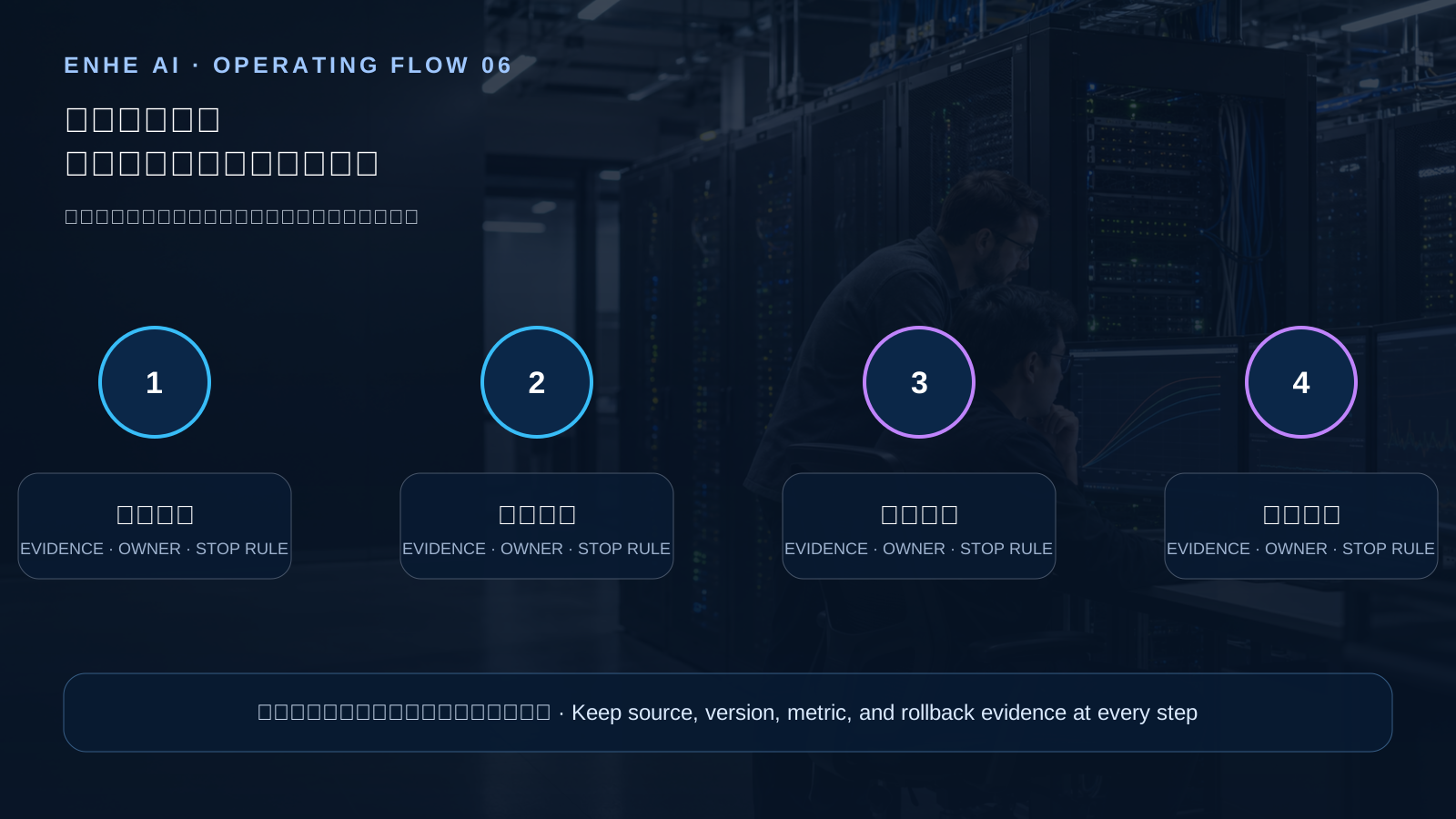
- Freeze representative requests and SLA targets
- Sweep upward from low concurrency with hard stop rules
- Record P50/P95/P99, throughput, errors, and cost
- Choose a setting with headroom and remove test resources
AI frontier news and analysis, AI software and model tools, AI skill tutorials and validation methods, and AI account and permission guidance
FAQ
Is the maximum-throughput point the production setting?
Not necessarily. Tail latency and errors can rise sharply near saturation, so choose a passing point with headroom.
Must the sweep be repeated after changing models?
Yes. Model, container, hardware, context, and output distribution can all change the saturation point.
Summary
A concurrency sweep turns capacity planning into a repeatable experiment: fix the workload, raise load in steps, stop on latency or error limits, select a setting with headroom, and verify cleanup.
This AI-assisted article is checked by ENHE AI automation for official sources, bilingual fields, media rights, page safety, and historical duplication before publication.
What this means for everyday users
A concurrency limit is not a permanent constant. Model version, quantization, container, instance, prompt length, output length, and streaming can all move the curve. Keep versioned baselines and operate below the last passing point rather than at the edge. A 20–30% margin is a useful trial range, but the final reserve should reflect business consequence and burstiness.
Tools you may use



Related tutorials
Related Tools And Tutorials
Use the following ENHE AI sections to continue from the news signal into tool selection, account-service guidance, or practical learning.
Related reading
AWS brings Isaac Lab into a managed cloud robotics workflow
AWS described a cloud reference setup for NVIDIA Isaac Lab that combines Isaac Sim, Isaac Lab, remote visualization, and services such as SageMaker AI and MLflow. Teams can configure an individual workstation or a fleet for simulation and policy experiments. This can make compute and experiment tracking easier to provision, but it does not remove the sim-to-real gap. A policy that performs well in simulation still needs controlled testing on the target robot, with safety limits, latency, sensor differences, and a rollback path checked before any production use. Availability and setup details should be confirmed with the AWS account team because the post describes a particular deployment path rather than a universal turnkey service.
vLLM-Omni links real-time image generation and asynchronous video generation on SageMaker
AWS published a September 28 workflow for image and video generation with vLLM-Omni on Amazon SageMaker AI. Two endpoints are deployed from the same Deep Learning Container: FLUX.2-klein-4B runs as a real-time image endpoint, while Wan2.1-VACE-1.3B runs asynchronously for video. The generated still image and a motion prompt are submitted to the video endpoint, and the resulting MP4 is stored in Amazon S3, with an optional Streamlit interface for demonstration. The shared container simplifies framework packaging, but production teams still need separate capacity, queue, timeout, moderation, content-rights, retention, and idle-cost controls for the real-time and asynchronous stages, plus traceability from every final video back to its prompts and source asset.
Qwen3-TTS reaches managed SageMaker endpoints for real-time voice cloning
AWS published a deployment guide for Qwen3-TTS-12Hz-1.7B-Base on Amazon SageMaker AI on September 25. Teams can create a managed GPU endpoint from SageMaker JumpStart, send target text with a reference recording and transcript, and receive 24 kHz speech without retraining the model. The guide also exposes model latency, platform overhead, per-instance invocation volume, concurrency, and error metrics for capacity planning. Voice cloning reproduces a person's vocal identity, so production use still requires explicit speaker permission, synthetic-media disclosure, tightly controlled reference audio, anti-impersonation tests, and operational paths for consent withdrawal, access review, and deletion. Teams should reproduce the vendor's result with their own data, controls, workload, and operating limits before production adoption.
SageMaker AI Adds Script Mode in SDK v3 for Bring-Your-Own-Model Training
SageMaker AI Adds Script Mode in SDK v3 for Bring-Your-Own-Model Training. The official source dated August 2026 describes a concrete product, research, or governance change rather than a universal guarantee. This article separates what is available now from preview or planned access, then translates the change into one ordinary-user task: migrating an existing training script to SageMaker while verifying dependencies, data, and cost. Before using it, readers should verify account eligibility, workspace permissions, data boundaries, model or service cost, human review, audit logs, and rollback. A small reversible pilot with explicit acceptance checks is safer than copying a headline result or assuming that a new integration can publish, merge, or make decisions without approval. The source set is linked so teams can recheck availability and scope when the product changes.
A Banking Agent Writes Then Reverses: AWS Describes a Demo, Not Production Trading
An October 5 AWS post describes Texas Capital Bank’s Trust-Earned Autonomy pattern, in which reviewer agreement can inform an agent’s permissions and a prior write can be reversed if trust declines. AWS explicitly says the agent pattern is still a demonstration running on demo-scale Apache Fineract with synthetic data, not a production workload or real production transaction flow. The bank’s separate document-extraction capability is described as operating in production. This article focuses on revocable authority, auditability, and system boundaries, and avoids presenting the demonstration as an already deployed autonomous banking agent. Teams should check applicability against their own environment, record assumptions, and validate decisions with representative operational evidence.
Microsoft’s 2026 Defense Report: AI Is Changing the Pace of Cybersecurity
In its October 1 commentary on the 2026 Microsoft Digital Defense Report, Microsoft says threat actors are using AI in parts of existing workflows, including reconnaissance and social engineering. The post does not claim that attacks have become fully autonomous; it highlights changes in speed and scale. Identity controls, least privilege, data protection, monitoring, testing, and secure development remain central. This article separates Microsoft’s observations from independent conclusions and turns the post into a practical checklist. Teams should compare the claims with their own telemetry and incident history before changing priorities. Teams should check applicability against their own environment, record assumptions, and validate decisions with representative operational evidence.