
AWS Reimagine report says coordination becomes the bottleneck as AI speeds up
AWS interviewed 154 leaders across 27 countries about the organizational, funding, and judgment problems that appear after pilots.

Key takeaways
AWS published its Reimagine: Turning AI into Value report on September 24 after interviewing 154 leaders across 27 countries and 23 industries. The accompanying article argues that AI makes building faster without automatically reducing the cost of deciding, funding, governing, approving, and coordinating work. When organizations keep processes designed for slower delivery, bottlenecks move from writing code to judgment and capital allocation. AWS also discusses efficiency savings that never become business outcomes and the challenge of helping junior staff build judgment when routine practice disappears. The report is useful input for organization design and investment reviews, not a universal promise of returns. Teams should verify the vendor claims against their own workloads, controls, and operating context before making a production decision.
Direct answer
AWS published its Reimagine: Turning AI into Value report on September 24 after interviewing 154 leaders across 27 countries and 23 industries. The accompanying article argues that AI makes building faster without automatically reducing the cost of deciding, funding, governing, approving, and coordinating work. When organizations keep processes designed for slower delivery, bottlenecks move from writing code to judgment and capital allocation. AWS also discusses efficiency savings that never become business outcomes and the challenge of helping junior staff build judgment when routine practice disappears. The report is useful input for organization design and investment reviews, not a universal promise of returns. Teams should verify the vendor claims against their own workloads, controls, and operating context before making a production decision.
Verified facts
AWS published Reimagine: Turning AI into Value on September 24, 2026.
The research covers 154 leaders across 27 countries and 23 industries, including 128 executives deploying AI, 23 Amazon leaders, and three researchers.
The article says faster building shifts bottlenecks toward decisions, governance, funding, approvals, and coordination.
What changed
- The study covers 154 leaders
- Building speed and coordination cost diverge
- Efficiency savings need an accountable business owner
- Developing junior judgment becomes a new challenge
Impact for AI users
Organizations can turn the report into a process inventory: identify approvals designed for hiring speed, savings without an owner for growth, and teams losing opportunities to learn judgment. Evaluate AI work across delivery speed, business outcome, governance time, and capability growth instead of token volume or lines of code alone.
Operating checklist
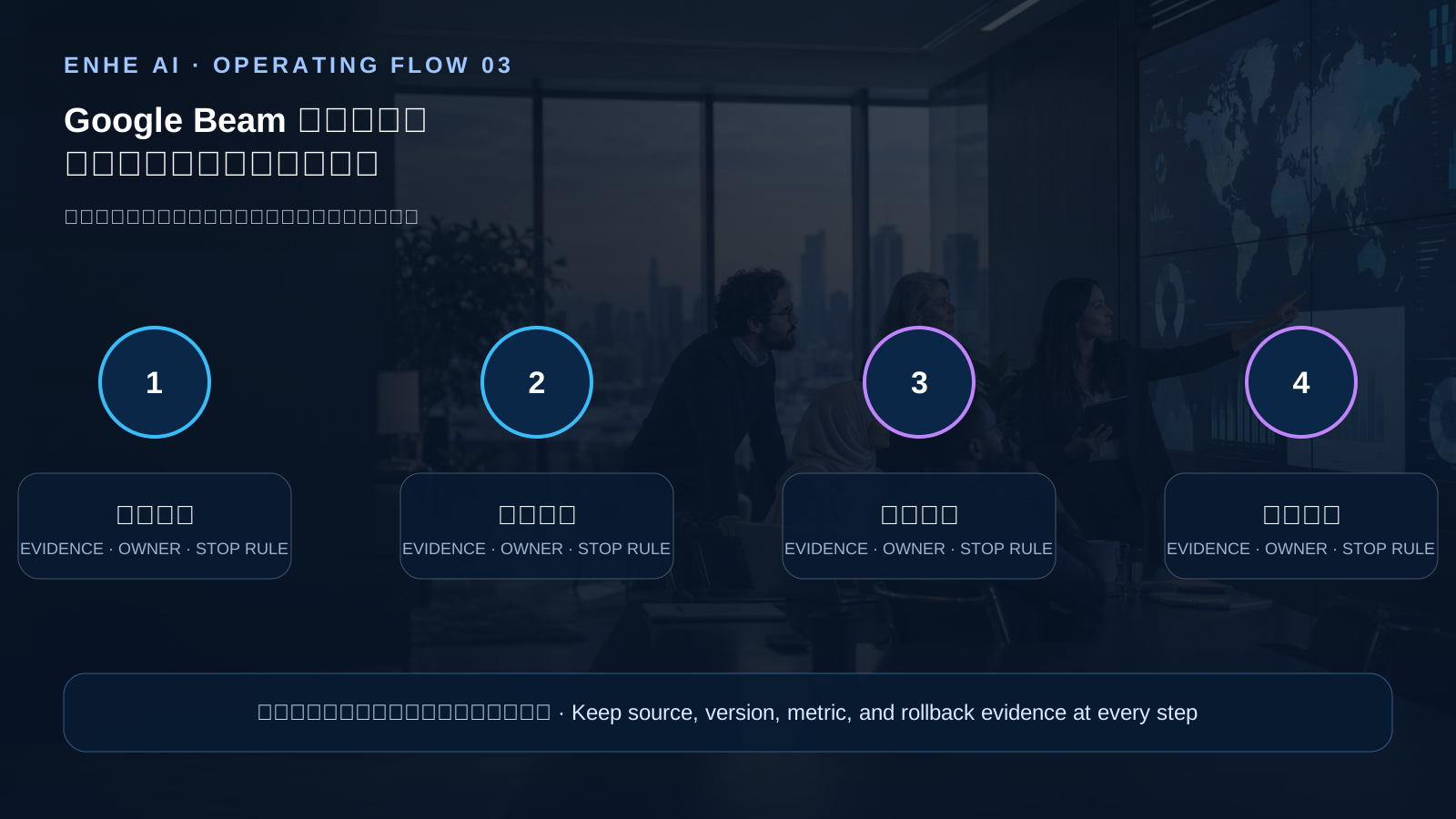
- Map every approval from building to production
- Assign an outcome owner to efficiency savings
- Right-size governance gates to consequence
- Keep tasks that let junior staff practice judgment
AI frontier news and analysis, AI software and model tools, AI skill tutorials and validation methods, and AI account and permission guidance
FAQ
Does the report prove AI always creates growth?
No. AWS discusses cases where efficiency savings did not become business outcomes.
What does risk-proportional governance mean?
High-consequence decisions need stronger review, while low-risk flows can use lighter controls.
Summary
As AI makes execution faster, scarce advantages become explainable judgment, proportionate governance, and the ability to turn savings into outcomes.
This AI-assisted article is checked by ENHE AI automation for official sources, bilingual fields, media rights, page safety, and historical duplication before publication.
What this means for everyday users
Organizations can turn the report into a process inventory: identify approvals designed for hiring speed, savings without an owner for growth, and teams losing opportunities to learn judgment. Evaluate AI work across delivery speed, business outcome, governance time, and capability growth instead of token volume or lines of code alone.
Tools you may use


Related tutorials
Related Tools And Tutorials
Use the following ENHE AI sections to continue from the news signal into tool selection, account-service guidance, or practical learning.
Related reading
SageMaker Studio Simplifies New-Customer Access: Credits, Setup, and Cost Boundaries
AWS announced a simplified path into Amazon SageMaker Studio for new customers on October 19, 2026. Eligible users can sign up with Amazon, Apple, GitHub, Google, or email in two or three steps, and most do not need to enter a credit card first. Studio is created in about 20 seconds. New customers receive $100 in Free Tier credits and may earn another $100; the free period ends after six months or when credits are exhausted, and resource usage then stops automatically. This article provides a bounded first-experiment checklist covering account eligibility, GPU quota visibility, endpoint shutdown, credit monitoring, and the decision point before a paid upgrade.
When Should an AI Agent Act Autonomously? A Scope, Know, Bound, Observe Checklist
An AI agent should receive more autonomy only when its actions can be verified, not because one demonstration looked successful. AWS describes a Trust in Depth framework organized around four lifecycle questions: Scope, Know, Bound, and Observe. This durable guide turns those questions into an operational checklist for a small team. Using an internal task-status update as the example, it identifies evidence required before launch, controls during execution, records after execution, and conditions that should stop the agent and request human review. Precise rules can sometimes be tested or formally checked, while tone, sensitive context, and high-impact decisions still require judgment. The objective is bounded, reviewable autonomy rather than either constant approval or unrestricted action.
Smartsheet MCP Is Generally Available for Amazon Quick and Kiro Workflows
AWS has published a guide to the generally available Smartsheet MCP Server, which exposes more than forty tools for reading, writing, and managing sheets, rows, columns, and automations. Business users can connect through Amazon Quick, while developers can configure the server in Kiro. This article compares the two paths, lists the documented account, authentication, and regional requirements, and proposes a safe first task: identify blocked work and produce a review checklist without writing changes. Only after results, user permissions, and organization controls are verified should a team enable a narrowly scoped write action. Natural-language requests do not grant extra access, and a connected agent should not be treated as an unrestricted project administrator.
Microsoft and NVIDIA Publish an Open-Weight Model Risk Guide With Five Risk Categories
Microsoft and NVIDIA published their first joint resource for enterprise open-weight model risk management on October 16, 2026. The guidance organizes discussion into five broad categories: cybersecurity, data protection, content, human-AI interaction, and bias. Its central point is that weight openness alone does not determine risk; the model, intended use, deployment architecture, users, data, tools, and safeguards all shape the actual system. It also distinguishes model access from deployment choice and warns that self-operated deployments can transfer controls from a managed provider to the enterprise. This article turns the framework into a practical selection, ownership, evaluation, and review checklist for ordinary teams.
Reflection Beam Arrives on AWS: How to Choose an Agentic Coding Deployment
AWS introduced Reflection AI's Beam on October 16, 2026 as an open-weight model for agentic coding and long-horizon work. Beam is designed to resolve software issues, modify code, call tools, interpret intermediate results, and continue multi-step workflows. AWS describes a sparse mixture-of-experts architecture with 501 billion total parameters, 23 billion active parameters, and an effective one-million-token context length reported by Reflection. Weights are released under Apache 2.0 in BF16, FP8, and NVFP4 variants. This guide separates the managed SageMaker JumpStart path from the more controllable HyperPod route and explains the operational evidence teams should collect before trusting either in real projects.
Nine-Stage AI Agent Evaluation Checklist: From First Commit to Production Drift
AWS published a nine-stage production AI-agent evaluation framework built around Amazon Bedrock AgentCore on October 16, 2026. It follows an agent from defining quality and comparing experiments through merge checks, deployment gates, canary scoring, adversarial testing, drift detection, live pulse monitoring, and feedback-driven improvement. The framework evaluates five dimensions—safety, quality, performance, cost, and operational control—at tool, individual-agent, and multi-agent levels. This durable guide converts the public framework into a vendor-neutral checklist for ordinary teams, with minimum evidence, ownership, and stop conditions designed to catch soft failures where latency and uptime remain normal while answer quality quietly declines over time.